
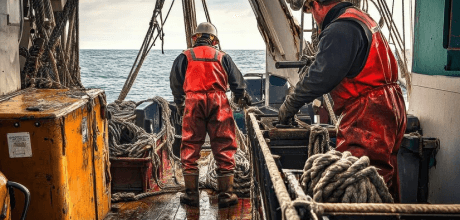
The industrial shipping lanes of the Port of Mobile and the commercial fishing grounds off Dauphin Island form the economic backbone of the Alabama Gulf Coast. The dedicated men and women who work these waters face inherent daily hazards. Between heavy machinery, unpredictable Gulf weather, and physically demanding labor, the risk of catastrophic injury is always present. However, few maritime workplace incidents are as devastating or life-altering as severe lacerations and traumatic amputations.
When a hydraulic winch fails on a cargo ship near the APM Terminals, or a high-tension mooring line snaps on a tugboat in the Mobile River, the physical consequences for a deckhand are often immediate and permanent. The moments after such an accident are chaotic, filled with shock, intense pain, and the urgent need for emergency medical care. The path forward is rarely obvious, and the financial anxiety regarding lost wages and mounting medical bills only adds to the trauma.
What Are the Immediate Steps to Take After a Severe Cut or Amputation at Sea?
After a severe cut or amputation on a vessel, immediately apply pressure to control bleeding and secure any severed digits or limbs in a clean, watertight bag placed on ice. Notify the captain to log the incident and request an immediate emergency medical evacuation to a trauma center.
Taking immediate and decisive action following a severe laceration or amputation is vital for both your physical survival and your future legal claim. The marine environment is highly unsanitary. Gulf waters and ship decks harbor dangerous bacteria, including Vibrio vulnificus, which can rapidly turn a severe cut into a life-threatening infection. Your crewmates must prioritize stopping the blood loss using tourniquets or direct pressure while coordinating with the United States Coast Guard for an emergency medevac.
In the Mobile area, traumatic injuries of this magnitude typically require transport to USA Health University Hospital, which serves as the region’s only Level 1 trauma center. Their specialized surgical teams are equipped to handle complex reattachments, vascular repairs, and critical wound care that smaller urgent care facilities simply cannot manage.
Once your immediate medical crisis is stabilized, the focus must shift to protecting your legal rights. Vessel owners and their insurance companies begin investigating an accident the moment it is reported. To protect yourself, you or a trusted family member should:
- Ensure the Incident is Logged: Verify that the captain or commanding officer has formally entered the accident into the ship’s official logbook. This creates a permanent, legally binding record of the event.
- Gather Witness Information: If possible, collect the names and contact details of every crew member who witnessed the accident or the unsafe conditions that caused it.
- Document the Scene: If you have a trusted crewmate onboard, ask them to take clear photographs of the machinery involved, the blood on the deck, and any missing safety guards before the company has a chance to clean the area or repair the equipment.
- Avoid Signing Documents: Do not sign any incident reports, settlement offers, or recorded statements provided by the company’s insurance adjusters without first consulting a knowledgeable maritime attorney.
How Does the Jones Act Protect Alabama Seamen After an Amputation?
The Jones Act protects injured seamen by allowing them to seek compensation if their employer’s negligence contributed to their severe cut or amputation. Under this federal law, workers only need to prove that careless actions, inadequate training, or unsafe orders played a slight role in causing their traumatic injury.
When a land-based worker in Alabama is injured, they are generally restricted to state workers’ compensation, which severely limits the amount of money they can recover and prevents them from suing their employer. Maritime law operates entirely differently. The Jones Act provides seamen with the powerful right to file a lawsuit directly against their employer for negligence.
The standard of proof in a Jones Act claim is highly favorable to the injured worker. Courts refer to this as a “featherweight” burden of proof. This means you do not have to prove that the employer’s carelessness was the sole or even the primary cause of your amputation. You only need to demonstrate that their negligence contributed to the incident in the slightest degree. Because maritime employers have a strict duty to provide a safe working environment, any failure in that duty opens them up to liability.
Negligence leading to severe cuts and amputations often takes the following forms on Gulf Coast vessels:
- Lack of Proper Training: Ordering an inexperienced greenhorn to operate a complex hydraulic press or handle high-tension lines without adequate supervision.
- Inadequate Personal Protective Equipment (PPE): Failing to supply heavy-duty cut-resistant gloves to workers handling wire ropes or processing fish on a Bayou La Batre trawler.
- Unsafe Work Orders: Forcing the crew to work at a dangerous pace, in severe weather conditions, or in low-visibility environments simply to meet a commercial deadline.
- Failure to Enforce Safety Protocols: Allowing crew members to bypass safety mechanisms or ignore established lockout/tagout procedures during equipment maintenance.
What Makes a Vessel Unseaworthy in Cases of Severe Lacerations?
A vessel is considered unseaworthy when its equipment, design, or crew is not reasonably fit for its intended purpose, leading to an injury. If a frayed cable snaps or a rusty saw lacks a protective guard and causes an amputation, the shipowner is strictly liable for the resulting damages.
Alongside a Jones Act negligence claim, injured seamen frequently pursue an “unseaworthiness” claim. This is a fundamentally different legal concept. The doctrine of unseaworthiness is a strict liability standard. This means that you do not have to prove the vessel owner knew about the dangerous condition, nor do you have to prove they were actively careless. If a piece of equipment failed and caused a severe cut or amputation, the owner is legally responsible.
Vessel owners have an absolute, non-delegable duty to ensure their ship is reasonably safe for the crew. This duty extends to the hull, the gear, the living quarters, and even the competence of the crew members themselves. A ship does not need to be in danger of sinking to be declared unseaworthy under federal law. A single defective tool is enough to trigger this liability.
Common unseaworthy conditions that lead to catastrophic lacerations and loss of limbs include:
- Defective Machinery: Winches with failing brakes, hoists with stripped gears, or cargo cranes that unexpectedly drop heavy loads onto the deck.
- Missing Safety Guards: Power tools, table saws, or engine room belts that are missing their factory-installed protective covers.
- Worn or Frayed Lines: Mooring lines, hawsers, or synthetic cables that have been allowed to degrade in the salt air and snap under extreme tension.
- Slippery or Cluttered Decks: Areas around the Theodore Industrial Canal or Pinto Island terminals where hydraulic fluid, fish slime, or uncoiled hoses are left unattended, causing a worker to fall into moving machinery.
What Are Maintenance and Cure Benefits for Amputation Injuries?
Maintenance and cure are absolute, no-fault benefits provided to seamen injured in the service of a vessel. Maintenance provides a daily living allowance for room and board, while cure covers all necessary medical expenses until the injured worker reaches maximum medical improvement for their lacerations or amputation.
Every recognized seaman in Alabama is entitled to Maintenance and Cure benefits. These benefits are an ancient cornerstone of maritime law, designed to ensure that sailors are not abandoned to the streets when they fall ill or are injured while working. Because these are “no-fault” benefits, your employer must provide them regardless of who caused the accident. Even if you made a mistake that led to your own severe cut, you still receive Maintenance and Cure.
Maintenance is designed to replace the room and board you would have received while living on the vessel. You will receive these daily or weekly checks while you are recovering at home. Some maritime employers attempt to pay an insultingly low daily rate sometimes as little as $15 to $30 a day. You have the legal right to challenge this amount to ensure it reflects your actual cost of living, rent, and groceries in neighborhoods like Mid-Town, Spring Hill, or West Mobile.
Cure represents the employer’s obligation to pay for your medical treatment. In cases of amputation, the cost of Cure is astronomical. This legal obligation covers:
- Emergency trauma surgery and hospital stays.
- The initial fitting and purchase of custom prosthetic limbs.
- Extensive physical and occupational therapy at facilities like the Strada Patient Care Center.
- Psychiatric care and counseling to address the severe trauma, PTSD, and phantom limb pain associated with amputations.
- Prescription medications for pain management and infection prevention.
Crucially, the employer must continue to pay these benefits until a physician declares that you have reached Maximum Medical Improvement (MMI) the point where your condition has stabilized and further treatment will not yield physical improvement.
How Is Compensation Calculated for the Loss of a Limb?
Compensation for a maritime amputation is calculated by evaluating past and future medical bills, the lifelong cost of prosthetics, lost wages, and diminished future earning capacity. Additionally, courts award significant financial damages for the permanent physical pain, disfigurement, and mental anguish caused by the loss of the limb.
When you file a claim for unseaworthiness and Jones Act negligence, you are pursuing compensation that goes far beyond the basic medical coverage of Maintenance and Cure. For high-earning maritime professionals, an amputation almost always signifies the end of their career at sea. The physical demands of working on a rig in the Gulf of Mexico or a cargo vessel in the Port of Mobile cannot typically be met with a missing hand, arm, or leg.
A comprehensive financial recovery strategy must account for the reality that the victim will suffer financial and physical consequences for the rest of their life. Experienced legal counsel will work with vocational rehabilitation specialists and life-care planners to accurately calculate these extensive damages.
Recoverable damages in an amputation or severe laceration case include:
- Loss of Future Earning Capacity: If a permanent disability prevents you from returning to the water, you are entitled to the difference between your projected lifetime maritime earnings and what you can now earn in a lighter, land-based role.
- Future Medical Care: While “Cure” covers medical costs up to MMI, a negligence settlement must cover the cost of medical care you will need after reaching MMI. This includes the replacement of expensive prosthetic limbs every few years for the rest of your life.
- Pain and Suffering: Substantial compensation for the agonizing physical pain of the initial trauma, the grueling recovery process, and chronic issues like phantom limb syndrome.
- Disfigurement and Loss of Enjoyment: Financial recovery for the permanent scarring, the psychological impact of being disfigured, and the inability to participate in hobbies, sports, or family activities you once enjoyed.
Why Is Choosing Your Own Doctor Important After a Maritime Injury?
Choosing your own doctor is vital because it ensures you receive an objective medical evaluation focused entirely on your health rather than your employer’s financial interests. Under maritime law, you have the absolute right to select independent specialists for your surgical, prosthetic, and ongoing physical therapy needs.
Following a severe workplace accident, maritime employers or their insurance adjusters will often pressure injured seamen to treat exclusively with a “company doctor” or a clinic contracted by the vessel owner. They may imply that your medical bills will only be paid if you use their preferred providers. This is a dangerous tactic.
Company-appointed doctors often have an inherent conflict of interest. They are financially incentivized to keep the employer’s costs low. As a result, they may minimize the severity of your nerve damage, rush you through physical therapy, or prematurely declare that you have reached Maximum Medical Improvement so the company can cut off your Maintenance and Cure benefits. They might also authorize you for “light duty” work before you are physically ready, jeopardizing your recovery.
You have the absolute right under federal law to refuse the company doctor and select your own physicians. For severe lacerations and amputations, it is highly recommended that you establish care with independent, board-certified orthopedic surgeons and specialists within trusted local networks like Mobile Infirmary or USA Health. An independent physician works for you, ensuring your medical records accurately reflect the true, devastating nature of your injury, which is essential evidence for your legal claim.
How Long Do I Have to File an Amputation Claim Under Maritime Law?
Under the Jones Act, injured seamen have three years from the date of the amputation or severe laceration to file a formal lawsuit. General maritime law claims like unseaworthiness are instead governed by the doctrine of laches, under which courts determine timeliness based on unreasonable delay causing prejudice. Failing to take legal action within these limits will result in a total loss of your compensation rights.
While three years may seem like a generous amount of time, waiting to initiate the legal process is one of the most damaging mistakes an injured worker can make. Evidence in the maritime industry disappears rapidly. Ships are constantly moving, equipment is repaired or replaced, and crew members who witnessed your accident may be reassigned to different vessels halfway across the world.
If you suffered a severed finger from a broken winch on a Monday, the company might replace that entire winch assembly by Wednesday. Without immediate legal intervention to send a “spoliation of evidence” letter which legally bars the company from destroying or altering evidence proving that the equipment was unseaworthy becomes significantly more difficult.
Furthermore, building a comprehensive case for a catastrophic injury takes time. It involves gathering extensive medical records, consulting with economic experts to calculate your lost lifetime earnings, and thoroughly investigating the safety history of the vessel. The sooner your legal team can begin preserving evidence and interviewing witnesses, the stronger your position will be when demanding a fair settlement or presenting your case in a federal or state courtroom.
Protecting Your Future on the Alabama Coast
A severe injury like an amputation doesn’t just impact your physical health; it immediately threatens your family’s financial stability and your entire way of life. Ensuring that you maximize your financial recovery means holding negligent vessel owners fully accountable and refusing to accept lowball settlement offers from insurance adjusters. Our focus is on providing the authoritative legal representation you need to navigate the complexities of federal maritime statutes in the Southern District of Alabama and local circuit courts.
Contact Fuquay Law Firm today for a confidential consultation.
Frequently Asked Questions
Q1. Can I be fired for filing a Jones Act claim after a severe cut?
No, federal maritime law strictly prohibits employers from retaliating against or firing a seaman for filing a Jones Act injury claim. If you are terminated for seeking rightful compensation, you may have grounds for a separate wrongful discharge lawsuit.
Q2. Does Alabama state workers’ compensation cover my maritime amputation?
No, seamen who spend a significant portion of their time working on vessels in navigation are exempt from Alabama state workers’ compensation. Instead, you are protected by federal maritime laws, which generally offer much broader and more substantial financial recovery.
Q3. What if I was partially at fault for the machinery accident?
Under the federal comparative negligence standard, you can still recover financial damages even if your actions contributed to the amputation. Your final compensation award will simply be reduced by the specific percentage of fault assigned to you by the court.
Q4. Will my maintenance payments cover my mortgage in West Mobile?
Maintenance is intended to cover basic room and board, but employers often try to pay an unreasonably low daily rate. You have the right to legally challenge this amount to ensure it reflects your actual living expenses in your community.
Q5. Are settlement funds for a lost limb taxable by the IRS?
Generally, maritime injury settlements compensating for physical injuries, including amputations, are entirely tax-free. The IRS views funds for lost wages, medical bills, and pain and suffering resulting from a physical trauma as a restoration of your health, not taxable income.
Q6. Who pays for my prosthetic limb replacements over my lifetime?
Through the maritime doctrine of cure and a successful negligence claim, your employer or the vessel owner can be held legally responsible for the lifetime costs of your medical care, including custom prosthetics, future surgeries, and ongoing physical rehabilitation.
Q7. How quickly should I contact a lawyer after a vessel accident?
You should contact an attorney as soon as you are medically stable. Vessel owners begin building their defense immediately after an accident occurs, and critical evidence on the ship can disappear or be repaired within days of the traumatic incident.
