
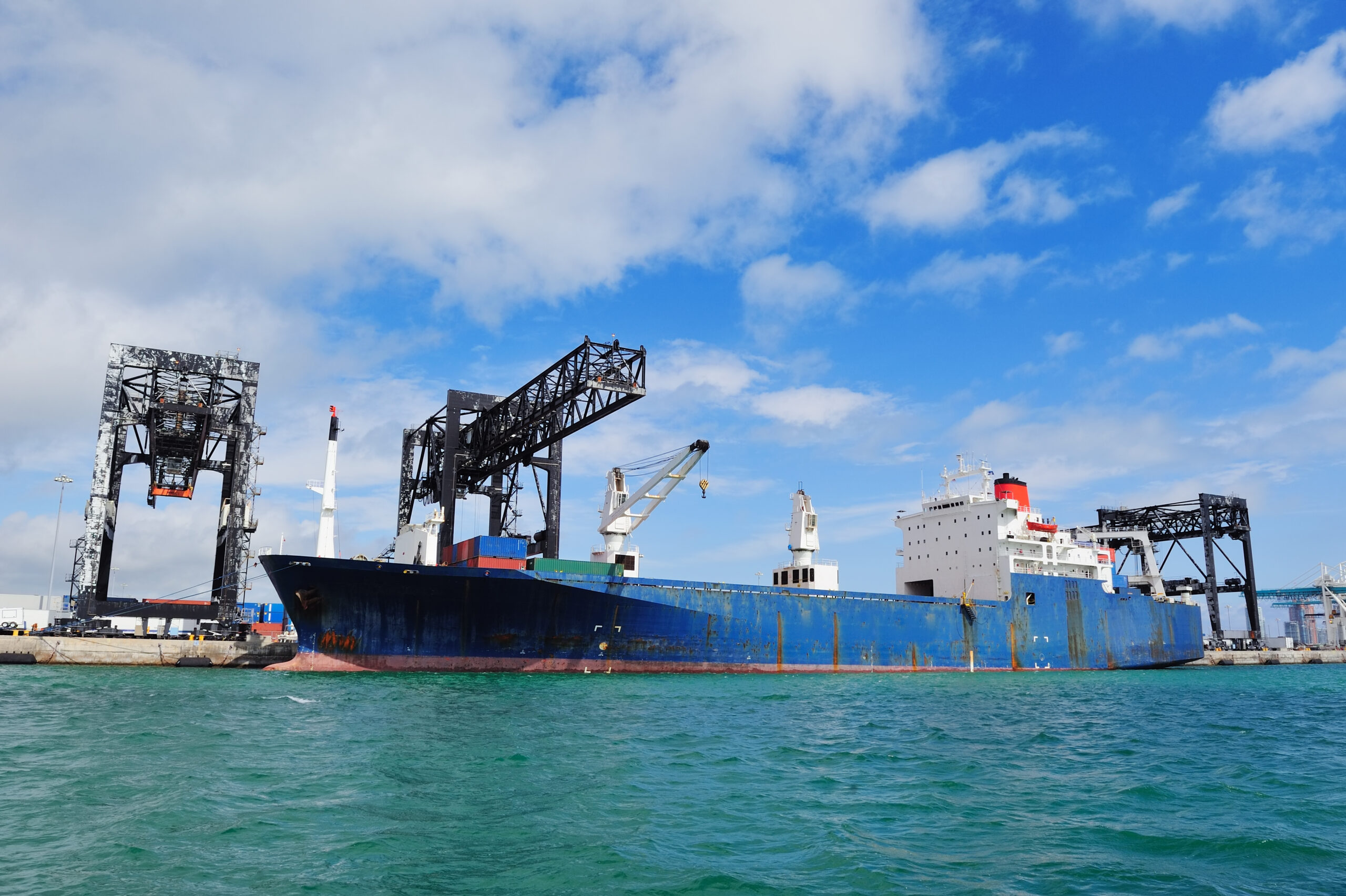
Deckhands and stevedores working along the Mobile River or the Theodore Industrial Canal face constant physical risks every time they step onto a vessel. When loading or unloading loose materials like coal, grain, or scrap metal, the sheer weight of the cargo creates a towering, precarious environment. A single shifting wave or a miscalculated crane drop can trigger a catastrophic cargo cave-in. These collapses happen without warning, instantly transforming a routine shift at the Port of Mobile into a life-threatening emergency.
The sheer tonnage involved means that workers caught in these collapses suffer devastating crushing injuries, asphyxiation, and permanent physical trauma. Traditional state workers’ compensation systems do not cover traditional crewmembers injured on navigable waters. Instead, your rights fall under complex federal admiralty laws that demand strict liability from vessel owners and hold maritime employers accountable for negligence.
Why Do Cargo Cave-Ins Happen at The Port of Mobile?
Cargo cave-ins typically occur due to improper stowing, failure to secure bulk materials, or shifting weight during transit. When stevedores or deckhands enter a vessel’s hold at the Port of Mobile, unstable cargo like coal or steel can suddenly collapse, causing severe crushing injuries or suffocation.
The dynamics of bulk cargo transport require precise engineering and constant supervision. Even while docked at the Port of Mobile, the constant heave and pitch caused by passing harbor traffic or tidal changes in the Gulf of Mexico can destabilize a cargo pile. The physical mechanics of a bulk cargo hold are unforgiving, leaving no margin for operational errors.
Several specific factors contribute to the sudden collapse of bulk materials during maritime operations:
- Improper loading sequences that create unnaturally steep angles of repose for loose bulk commodities.
- Failure to install required shifting boards or cargo netting to compartmentalize the hold effectively.
- Rushed operations by understaffed crews trying to meet tight turnaround schedules at busy ports.
- Crane operator errors that drop heavy loads too quickly, sending destabilizing shockwaves through the existing cargo pile.
When a cave-in happens, thousands of pounds of material can bury a worker in a matter of seconds. The immense pressure causes immediate crushing trauma to the chest, pelvis, and extremities. Rescuing a trapped worker from a deep ship’s hold takes significant time and specialized equipment, which compounds the severity of the medical emergency and increases the risk of permanent neurological damage from oxygen deprivation.
How Does the Jones Act Protect Crewmembers from Cargo Shifts?
Under the Jones Act, seamen injured by a cargo cave-in can sue their direct employer for negligence. If poor training, understaffing, or an unsafe order contributed to the cargo collapse even slightly, the employer is financially liable for the resulting physical and financial damages.
Enacted to protect mariners who perform heavy labor in hazardous environments, the Jones Act provides a highly protective legal remedy. Under federal law, qualifying seamen have the statutory right to file a direct lawsuit against their employer for negligence under the federal Jones Act statute. This powerful federal statute acknowledges that maritime employers hold total control over the work environment and must bear the financial responsibility when safety protocols fail.
The burden of proof in these claims is intentionally low. You do not have to prove that your employer was entirely at fault. If a captain’s poor decision-making or a mate’s failure to properly supervise the deck crew contributed to the cargo collapse by even one percent, the employer bears liability. This legal standard forces maritime companies to prioritize safety over operational speed.
Actionable employer negligence during cargo operations often involves administrative and operational failures:
- Ordering a deckhand into a partially loaded hold without first testing the stability of the pile.
- Operating an understaffed vessel, which forces rushed operations and dangerous shortcuts.
- Failing to properly train new deckhands on the specific dangers of bulk cargo shifts and extraction procedures.
What Is an Unseaworthy Vessel in a Cargo Collapse Case?
General maritime law holds vessel owners strictly liable for unseaworthy conditions. If a cargo cave-in results from defective lashing gear, broken hatch covers, or an incompetent crew failing to monitor bulk shifting, the vessel is considered legally unseaworthy, giving injured workers a direct path to recovery.
Unseaworthiness is a completely separate legal concept from employer negligence, and it serves as a powerful avenue for recovery. General maritime law requires the owner of a vessel to owe an absolute, non-delegable duty to ensure the ship is fit for its intended purpose. Providing a safe working environment is not optional; it is a fundamental requirement of vessel ownership.
You do not necessarily have to prove that the vessel owner knew a specific piece of equipment was dangerous prior to the incident. If a cargo retaining wall fails under normal, expected use, the law presumes the equipment was defective. An unseaworthiness claim focuses entirely on the physical condition of the vessel and its appurtenances.
Common conditions that render a vessel unseaworthy during complex cargo operations include:
- Defective winches, cranes, or hoists used to move heavy materials in and out of the hold.
- Rusted or chemically degraded lashing gear that snaps under tension when cargo shifts.
- Missing or damaged hatch covers that allow dangerous weather elements into the hold.
- An incompetent or severely fatigued crew that compromises the safety of the vessel’s operations.
Can Alabama Longshoremen Sue for a Cargo Cave-In?
Land-based longshoremen injured by cargo collapses generally file for wage and medical benefits under the Longshore and Harbor Workers’ Compensation Act (LHWCA). However, Section 905(b) allows these dockworkers to file a separate third-party lawsuit against the vessel owner if the ship’s negligence caused the dangerous condition.
The legal classification of your job dictates exactly which federal laws apply to your recovery. To qualify as a seaman under the Jones Act, you must spend a significant portion of your working time in the service of a vessel in navigation. If your daily duties primarily keep you on the concrete docks of the Port of Mobile or loading cargo onto visiting ships, you likely fall under the LHWCA.
The LHWCA system functions similarly to a traditional workers’ compensation structure, providing essential medical coverage and a scheduled portion of your lost wages. While the LHWCA prevents you from suing your direct employer for negligence, it contains a critical exception. Under Section 905(b) of the LHWCA, injured longshoremen can pursue third-party claims against the vessel owner if their crew negligently managed the loading process or provided defective ship-based equipment.
What Role Do Federal Regulations Play in Cargo Loading Safety?
Federal safety regulations establish the baseline standard of care for maritime cargo operations. Violations of specific safety standards can serve as powerful evidence of negligence or unseaworthiness, strengthening a worker’s claim for comprehensive financial compensation after a cave-in.
Establishing liability often hinges on proving that a vessel owner or employer violated established safety protocols. For example, OSHA Safety and Health Regulations for Longshoring detail exactly how cargo must be stowed, secured, and handled. These regulations are not mere suggestions; they are the legal baseline for safe operations on the water.
When a company ignores these safety regulations to accelerate turnaround times, they breach their fundamental duty of care to their employees. Documenting these failures provides a concrete framework for proving negligence. When an employer’s direct violation of a safety statute causes an injury, it heavily supports the injured worker’s pursuit of financial justice.
Who Pays Medical Bills After a Cargo Crush Injury?
Injured seamen have an absolute right to Maintenance and Cure benefits regardless of fault. The vessel owner must cover all reasonable medical treatments—such as trauma care at USA Health University Hospital and provide a daily living stipend until the worker reaches maximum medical improvement.
Waiting for a lawsuit to wind its way through the courts takes time, but physical trauma from a crushing injury requires immediate attention. Maritime law recognizes this urgency through a centuries-old protection known as Maintenance and Cure. These are robust, no-fault benefits, meaning you are entitled to them even if your own momentary misjudgment contributed to the accident.
Cure covers all necessary and reasonable medical expenses related to the injury. If a cargo collapse forces a rush transport from the docks to the USA Health University Hospital trauma center, the vessel owner is legally obligated to cover those emergency surgeries, hospital stays, and physical rehabilitation. Corporate employers cannot force you to use their preferred doctors; you have the right to seek independent medical evaluations.
Maintenance provides a daily living allowance designed to cover your basic room and board while you recover off the vessel. These payments must continue uninterrupted until a physician formally determines you have reached maximum medical improvement. If a corporate employer wrongfully delays or denies these essential benefits, courts can penalize them heavily.
What Compensation Is Available for a Severe Cargo Injury?
Victims of cargo cave-ins can pursue comprehensive financial compensation through a maritime lawsuit. Recoverable damages include past and future medical expenses, lost offshore wages, diminished future earning capacity, and substantial recovery for the severe physical pain and mental anguish associated with crushing injuries.
The physical trauma of being buried under thousands of pounds of industrial material often marks the end of a mariner’s offshore career. Because returning to heavy physical labor is frequently impossible, the compensation available through a successful maritime lawsuit is explicitly designed to make the injured worker financially whole.
Corporate risk management teams fight aggressively to minimize these payouts. Thoroughly documenting the lifelong impact of the trauma is critical to overcoming these corporate defense tactics.
We work to secure maximum compensation across several distinct categories:
- Complete coverage for past medical bills and all projected future healthcare needs.
- Reimbursement for the full value of wages lost during the immediate recovery period.
- Compensation for the loss of future earning capacity, calculated based on your expected career trajectory on the water.
- Substantial recovery for physical pain, emotional trauma, and the overall loss of your quality of life.
Where Do You File a Maritime Cargo Injury Lawsuit in Alabama?
Major maritime injury claims arising in Alabama are typically filed in federal court. Due to complex federal statutes, most cargo cave-in lawsuits are litigated at the John Archibald Campbell U.S. Courthouse, though state court options exist under specific clauses.
Choosing the right venue for a lawsuit is a strategic decision that deeply impacts the trajectory and potential value of your case. Admiralty law is a highly specialized domain governed by centuries of legal precedent. Navigating these waters requires an attorney with deep familiarity with federal maritime procedures and local court rules.
Because maritime law relies on complex federal statutes, major vessel injury claims in Alabama are usually filed in federal court. Cases originating in the Gulf of Mexico or the local bays are typically litigated at the John Archibald Campbell U.S. Courthouse in downtown Mobile. Federal judges possess extensive institutional experience handling the nuances of Jones Act negligence, vessel arrest procedures, and complex unseaworthiness claims.
However, a legal provision known as the ‘saving to suitors’ clause sometimes gives injured seamen the option to file their claims in state courts, such as the Mobile County Circuit Court. Deciding whether the federal or state system offers an advantage depends heavily on the specific facts of the accident, the identity of the corporate defendants, and the nature of the damages being claimed.
What Evidence Is Needed to Prove a Cargo Cave-In Claim?
Successfully prosecuting a cargo cave-in claim requires comprehensive evidence to prove negligence or unseaworthiness. Vital evidence includes vessel maintenance logs, stowage plans, witness statements, safety inspection records, and detailed medical documentation of your crushing injuries.
Building a strong maritime injury case requires meticulous attention to detail and a proactive approach to evidence gathering. Corporate defendants will immediately dispatch investigators to protect their interests; injured workers must counter this by securing their own proof of liability. One of the most important pieces of evidence is the vessel’s official stowage plan, which dictates exactly how the cargo was supposed to be loaded and secured.
Discrepancies between the stowage plan and the actual conditions in the hold provide powerful proof of negligence. Additionally, we subpoena vessel maintenance logs, safety meeting records, and the captain’s logbook to identify any prior warnings about unstable cargo conditions.
Key pieces of evidence gathered during our investigations include:
- Official vessel stowage plans and pre-load stability calculations.
- Crane maintenance records and load testing certifications.
- Photographs of the hold, shifting boards, and damaged lashing gear.
- Independent medical evaluations detailing your crush injuries and rehabilitation needs.
How Long Do You Have to File a Cargo Cave-In Claim?
Under the Uniform Statute of Limitations for Maritime Torts, injured maritime workers generally have exactly three years from the date of the cargo cave-in to file a lawsuit. Failing to meet this strict federal deadline permanently destroys the right to recover financial compensation.
The legal clock starts ticking the exact moment the injury occurs. Governed by the Statute of Limitations for Maritime Torts, specifically 46 U.S.C. Section 30106, the three-year window applies to both Jones Act negligence and general maritime law unseaworthiness claims. While three years might sound like a generous amount of time to prepare a case, delaying legal action is incredibly risky.
Evidence degrades rapidly in the harsh marine environment. A broken piece of lashing gear might be quietly thrown into a dumpster at the next port call in Bayou La Batre. Crewmembers who witnessed the failed cargo loading might transfer to different companies, making them difficult to track down for depositions. Engaging legal representation early ensures that vital evidence is preserved through formal preservation letters and aggressive early investigation.
Protecting Injured Maritime Workers in Alabama
A severe accident during a cargo operation completely alters the course of your life. The aftermath brings immense physical pain, emotional trauma, and financial uncertainty for your entire family. Corporate safety officers begin building a defense to limit their liability the moment an accident happens; you must act just as deliberately to protect your own future.
Our knowledgeable attorneys at Fuquay Law Firm represent injured deckhands, engineers, and harbor workers across the Alabama coast. We handle these complex maritime claims on a contingency fee basis, which means you don’t pay any attorney’s fees unless we win your case. We fight relentlessly to ensure your medical bills are paid, your lost wages are recovered, and your future is secure. Let us handle the legal burden so you can focus entirely on your physical recovery. Contact Fuquay Law Firm today to schedule your free, confidential consultation.
Frequently Asked Questions
1. Does OSHA apply to maritime cargo loading in Alabama?
Yes, federal OSHA regulations apply specifically to longshoring and cargo handling operations in ports like Mobile. Violations of these safety standards can be used as direct evidence to prove employer negligence or vessel unseaworthiness in a maritime injury claim. Securing this documentation quickly prevents the corporate owner from hiding their regulatory failures.
2. Can I be fired for reporting a cargo hold injury?
Federal maritime law strictly prohibits employers from retaliating against or terminating mariners simply for exercising their legal rights to report an injury or file a claim. If a company wrongfully fires you for seeking medical attention after a cave-in, you may have grounds for an additional wrongful termination lawsuit.
3. What happens if another company loaded the cargo that collapsed?
If a third-party stevedoring company negligently loaded the cargo that later collapsed, you can pursue a direct third-party negligence lawsuit against them. We investigate the entire chain of custody to identify all liable parties involved in the improper loading sequence to maximize your recovery. This often unlocks compensation beyond standard wage replacement.
4. Will my compensation decrease if i was standing in the wrong part of the hold?
Maritime law applies the doctrine of pure comparative fault, meaning your compensation might be reduced by your percentage of blame, but you are not completely barred from recovery. Often, mariners are placed in dangerous positions due to poor supervision or degraded conditions, shifting liability back to the employer.
5. How is a bulk cargo cave-in legally different from a container collapse?
Bulk cargo cave-ins typically involve the shifting of loose materials and focus heavily on stowage stability within the hold. Container collapses often involve broken twist-locks or crane failures, though both fall under unseaworthiness and Jones Act claims depending on your specific worker classification. Both scenarios require an immediate investigation of the vessel’s deck hardware.
Are independent contractors protected under the Jones Act after a cargo accident?
Independent contractors generally do not receive Jones Act protections, as the law requires an employer-employee relationship and a substantial connection to a vessel in navigation. However, contractors injured by a cargo collapse can still pursue general maritime law claims or third-party negligence lawsuits against the vessel owner.
