
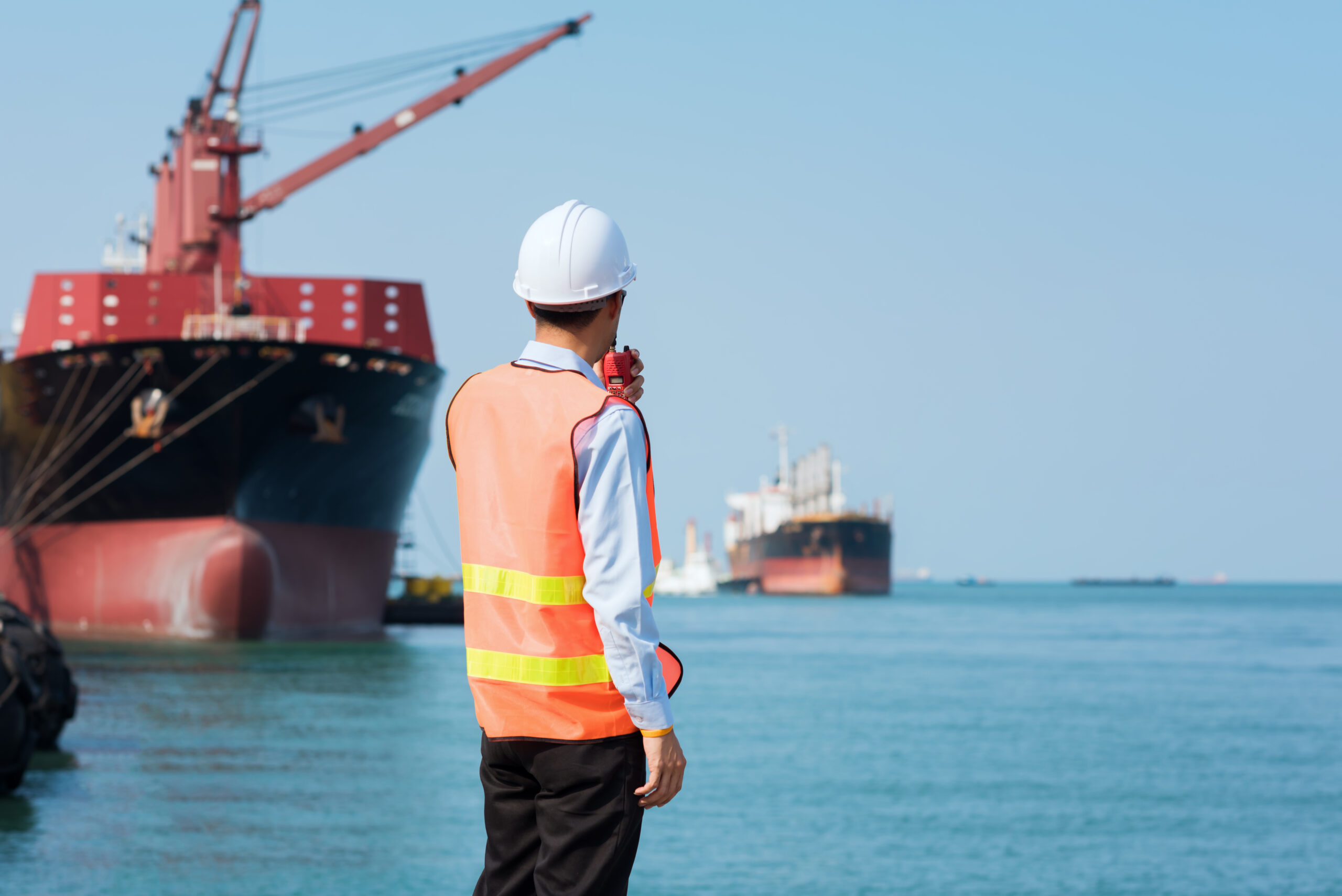
The dynamic environment of ports and docks, essential to commerce, can also present significant dangers. If you’ve been injured on a pier or another shore-side area due to the actions of a ship, navigating your legal options can seem daunting. A key piece of federal maritime legislation, the Admiralty Jurisdiction Extension Act (AEA), often comes into play in these scenarios, providing a potential path to compensation for dockside injuries.
The Genesis of the AEA: Addressing the “Pier-End Problem”
Before the Admiralty Jurisdiction Extension Act (AEA), admiralty jurisdiction was generally limited to incidents on navigable waters. This created the “pier-end problem” where injuries occurring on land, even if caused by a vessel, might not be covered by federal maritime law. For example, if a ship’s crane malfunctioned and injured a dockworker or a vessel struck a pier, causing injury, traditional admiralty law might not apply because the injury occurred on land. This forced injured parties to seek remedies under varying state laws, potentially leading to inconsistent outcomes compared to maritime law.
Congress recognized these inconsistencies and the need for a uniform approach to land-based injuries stemming from vessel activity. The AEA was enacted in 1948 to provide a consistent federal remedy for these “ship-to-shore” torts. The intent was to ensure that victims of a vessel’s negligence or unseaworthiness could access federal admiralty courts and maritime law regardless of whether the injury occurred on the pier or the ship. This legislation closed a significant jurisdictional gap and ensured a more equitable legal framework for dockside injuries caused by vessels.

Key Provisions and Scope of the Admiralty Jurisdiction Extension Act
The Admiralty Jurisdiction Extension Act, located at 46 U.S.C. § 30101, offers a straightforward directive. Its central provision articulates:
This language is foundational and contains several critical elements determining its applicability to dockside injuries.
“Caused by a Vessel”: This is a vital prerequisite. For the AEA to apply, the injury or damage on land must have been caused by a vessel. This doesn’t require the vessel to physically strike the land or person. It includes injuries stemming from:
- Negligent ship operations (e.g., excessive speed causing a damaging wake).
- Defective or improperly used vessel equipment (e.g., a faulty crane, a weak mooring line that parts, a poorly maintained ship’s gangway).
- Discharge of cargo attributable to the vessel’s actions or condition.
- Actions of the vessel’s crew performing ship-related duties. For example, if a ship’s winch malfunctions and a cable snaps, injuring a worker on the pier, that injury is “caused by a vessel.”
“On Navigable Waters”: The vessel responsible for the injury must have been on “navigable waters” at the time. For admiralty purposes, these are waters that are, or can be, used as commercial highways, including oceans, coastal waters, and many rivers and lakes supporting interstate or foreign trade. The vessel can be docked, moored, or anchored, provided it’s on such waters.
Specific Locations Covered: The AEA addresses incidents where harm occurs on land due to vessel activity. This includes various dockside areas:
- Piers and Wharves
- Docks and Marine Terminals
- Quays and Jetties
- Areas used for loading, unloading, repairing, or building vessels.
Limitations and Exclusions: While broad, the AEA is not without limits. The primary constraint is the requirement of causation by a vessel on navigable waters. If an injury on a dock is entirely unrelated to a vessel’s operation or condition (e.g., a slip on a permanently defective dock surface not impacted by a ship), the AEA would likely not apply; state law would govern. The Act extends jurisdiction; it does not automatically guarantee recovery. The injured party must still prove their claim’s elements, like negligence.
The AEA effectively erased the arbitrary line at the water’s edge for certain maritime torts, allowing maritime law to address harm directly linked to vessel operations, even if that harm manifested ashore.
Impact on Legal Remedies and Procedures for Dockside Injuries
When the Admiralty Jurisdiction Extension Act applies to a dockside injury claim, it shapes the available legal remedies and subsequent procedures. The case enters the domain of federal admiralty law, which has distinct features compared to typical state personal injury law.
Applicable Law – Maritime Principles: If your claim falls under the AEA, federal maritime law governs its substantive aspects. This includes:
- Comparative Negligence: Maritime cases usually follow a “pure” comparative negligence standard. If you are found partially at fault, your damage award is reduced by your percentage of fault. You can still recover even if found more than 50% at fault.
- No Jury Trial in Some Instances: Pure admiralty cases are often tried before a judge, not a jury. However, if an alternative basis for federal jurisdiction exists or the claim is brought in state court under specific circumstances (though AEA cases lean towards federal court), a jury trial might be possible.
- Specific Statutes of Limitations: A three-year federal statute of limitations generally applies to maritime personal injury claims. Claims against the U.S. government have a two-year limit and require pre-suit administrative claims.
Potential Claims under the AEA: The most frequent claim under the AEA is for negligence. This involves showing the vessel owner, operator, or crew breached a duty of reasonable care, directly causing the injury. Failing to maintain ship’s equipment, operating the vessel improperly, or not warning of a known hazard are examples.
The concept of unseaworthiness (a vessel owner’s duty to provide a vessel and equipment reasonably fit for their intended use) also exists. An unseaworthy condition of a vessel or its gear causing an AEA-covered land injury could potentially support a claim, though its application has nuances, especially concerning non-seamen.
Interaction with State Law: The AEA brings certain land-based injury claims into federal admiralty jurisdiction, often leading to the preemption of conflicting state laws.
- State Workers’ Compensation: For dockworkers under state workers’ compensation (if not covered by LHWCA), the AEA might offer a path to sue a negligent third-party vessel owner.
- LHWCA Interaction: For those covered by the Longshore and Harbor Workers’ Compensation Act (LHWCA), it provides their primary remedy against their employer. The AEA allows these workers to pursue a tort claim against a negligent third-party vessel owner. The LHWCA usually grants the employer/insurer a lien to recover benefits paid from any third-party settlement.
Forum and Jurisdiction: Lawsuits under the AEA are typically filed in federal district court sitting in admiralty, as the Act explicitly extends federal admiralty jurisdiction.
The application of federal maritime law via the AEA presents a distinct legal pathway, making experienced maritime counsel beneficial for navigating these claims.

Practical Considerations and Examples for AEA Dockside Injury Claims
Applying Admiralty Jurisdiction Extension Act principles to specific scenarios clarifies its reach. Several practical factors are involved when considering a dockside injury.
Real-World Scenarios – AEA Applies:
- A ship’s improperly secured gangway slips while a port employee walks on it from the dock, causing a fall onto the pier. The faulty gangway is vessel equipment.
- During cargo discharge by the ship’s crew using the ship’s crane, a sling breaks due to poorly maintained vessel equipment, and cargo strikes a truck driver on the wharf.
- A vessel’s thruster malfunctions during docking, causing the ship to strike the pier, dislodging concrete that injures a linesman.
Real-World Scenarios – AEA Likely Does Not Apply:
- A dockworker slips on oil on the pier spilled by a land-based forklift, with no vessel involvement.
- A poorly maintained dock structure (not damaged by a vessel) collapses.
- An injury occurs on a vessel permanently removed from navigation and functioning as a land structure.
Factors in Determining AEA Jurisdiction: Legal professionals assessing if the AEA governs a dockside injury examine:
- Was a “vessel” (ship, barge, tug, etc.) involved?
- Was the vessel on “navigable waters” at the time?
- Did the injury or damage occur on “land” (pier, wharf, etc.)?
- Was the injury “caused by” the vessel (its operation, equipment, or crew)? This causal link is often contested.
Importance of Evidence: Establishing the causal link to a vessel is essential. Thorough investigation and evidence gathering are vital:
- Photos/videos of the scene, vessel, equipment, and injuries.
- Witness statements.
- Accident reports.
- Vessel logs and maintenance records.
- Medical records.
- Expert testimony if needed (marine surveyor, maritime operations expert).
Prompt action to preserve evidence can significantly affect an Admiralty Jurisdiction Extension Act dockside injury claim.
Protect Your Rights After a Dockside Injury. Contact Fuquay Law Firm Today
If a dockside injury possibly involving a vessel has affected you or someone you know, seeking advice from legal counsel versed in maritime law and the Admiralty Jurisdiction Extension Act is a sensible step. An attorney can assess your situation, explain your rights, and guide you through the legal process. At Fuquay Law Firm, we assist individuals harmed in maritime settings. Contact us today to learn how we can help with your potential claim.
