
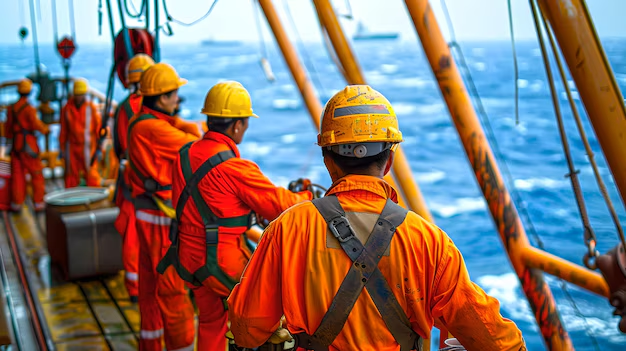
The waters along the Alabama coast, from the bustling Port of Mobile to the shipyards of Bayou La Batre and the vast stretches of the Gulf of Mexico, are arteries of commerce. They are also, unfortunately, places where maritime accidents occur. Vessels ground, collide, sink, or catch fire, and when they do, a specialized and courageous group of maritime workers is called in to manage the aftermath. Maritime salvage is not treasure hunting; it is one of the most hazardous jobs in the entire industry, a high-stakes operation to recover property, protect the environment, and clear vital waterways like the Mobile Ship Channel. The dangers inherent in this work are unique and unforgiving.
When these operations go wrong, the consequences for the salvage crew are often severe.
What Does Maritime Salvage in Alabama Involve?
Maritime salvage operations are complex, emergency-response actions. Unlike standard towing, salvage involves recovering, repairing, or refloating a vessel, its cargo, or other property after a maritime peril.
These operations in and around Alabama’s waters can include:
- Wreck Removal: Clearing sunken vessels or debris that pose a hazard to navigation, particularly in high-traffic areas like the Port of Mobile or the Tennessee-Tombigbee Waterway.
- Vessel Refloating: Operations to lift and dewater a ship that has grounded on a sandbar or sunk in relatively shallow water.
- Cargo Recovery: Safely removing cargo from a damaged or sunken vessel, which may include containers, bulk goods, or hazardous materials.
- Pollution Control: Containing and cleaning up fuel spills (bunker oil, diesel) or chemical leaks from a compromised vessel to protect Alabama’s sensitive coastal ecosystems.
- Firefighting and Damage Control: Boarding a vessel that is actively on fire or flooding to prevent a total loss.
Each of these tasks requires specialized equipment, meticulous planning, and a crew trained to work under extreme pressure and in dangerous conditions.
The Immediate Dangers of the Wreck Site
The damaged vessel itself is often the most significant and unpredictable hazard. A ship that has sunk or grounded is a compromised structure, and its environment is inherently unstable.
Salvage crews face immediate physical threats, including:
- Structural Instability: The vessel’s hull may have been breached, and its internal structure weakened by fire, explosion, or impact. There is a constant risk of further collapse, with decks, bulkheads, or heavy equipment falling.
- Sharp and Submerged Hazards: Torn steel, snapped cables, and shattered equipment create a dangerous underwater obstacle course for divers and a treacherous environment for crews working on the surface.
- Shifting Cargo: On a container ship or cargo vessel, the cargo may have broken loose. Heavy containers, vehicles, or bulk materials can shift without warning, crushing anyone in their path.
- Confined Spaces: Entering flooded engine rooms, cargo holds, or other compartments to place pumps or rigging means navigating in total darkness. These spaces can also contain toxic gases or lack sufficient oxygen.
What are the Environmental Hazards During Salvage?
A damaged vessel is a potential environmental disaster, and the salvage crew is the first responders. This places them at direct risk of exposure to harmful substances.
- Hazardous Materials (HAZMAT): The vessel’s cargo may include industrial chemicals, pesticides, or other toxic substances that are leaking from damaged containers.
- Fuel and Oil Spills: Bunker fuel, diesel, and hydraulic fluids create dangerously slick surfaces on the wreck and the salvage vessels, leading to slips and falls. Fumes from these substances can also cause respiratory damage.
- Fire and Explosion Risks: Flammable vapors from leaking fuel or certain cargoes can collect in enclosed spaces, creating a high risk of a fire or explosion, especially when cutting torches or other hot-work tools are used.
- Biological Hazards: Depending on the cargo (e.g., refrigerated foods) or the time the vessel has been submerged, crews may be exposed to bacteria, pathogens, and oxygen-deficient environments from decomposition.
Why are Commercial Diving Operations So Risky in Salvage?
Salvage divers are essential for assessing damage, rigging lifting gear, and patching hulls. They perform this work in the most challenging conditions imaginable. The “clear” waters often seen in recreational diving are a luxury that salvage divers rarely have, especially in the turbid, silt-filled waters of Mobile Bay or inland rivers.
Key diving dangers include:
- Zero Visibility: Divers often work entirely by feel, navigating sharp metal and debris in complete blackness.
- Entanglement: The wreck site is a web of loose rigging, nets, fallen structures, and debris. A diver’s umbilical (air supply) or the diver themselves can easily become snagged.
- Differential Pressure (Delta P): This is one of the most insidious and fatal risks. When water is being pumped out of a vessel or is moving through a breach in the hull, it creates an area of immense suction. A diver who gets too close can be pulled against the opening and held with thousands of pounds of force, making escape impossible.
- Decompression Sickness: “The bends” remain a constant threat. Salvage operations may require long, deep dives, and any error in ascent time or decompression stops can lead to this painful and potentially permanent injury.
- Equipment Malfunction: A diver’s life depends on their surface-supplied air, communication systems, and drysuits. Any failure in this equipment is a life-threatening emergency.
The Role of Heavy Lifting and Complex Machinery
Removing a wreck or heavy cargo requires immense force, supplied by derrick barges, floating cranes, and powerful hydraulic winches. This heavy machinery introduces another set of profound risks to the operation.
- Equipment Failure: A snap in a lifting cable, the failure of a crane’s boom, or a hydraulic leak can all lead to catastrophic failure. When a line parts under thousands of tons of tension, it whips back with enough force to sever limbs or kill.
- Dropped Loads: Losing control of a lift—whether it’s a section of the hull, a container, or a piece of salvage equipment—can capsize a support vessel or crush workers below.
- Dynamic Loading: The sea is never still. Waves and currents place dynamic, or “live,” loads on rigging. A piece of wreckage that weighs 50 tons in calm air can exert triple that force as it is pulled against a current or lifted on a rolling sea, exceeding the equipment’s safe working load.
- Pinch Points and Rigging: Working with heavy shackles, chains, and wire rope creates countless pinch points where a hand, foot, or entire body can be caught and crushed.
How Does Negligence Lead to Salvage Injuries?
While maritime salvage is inherently dangerous, many of the injuries that occur are not “accidents” but the direct result of negligence. Federal maritime law requires a salvage master and vessel owner to provide their crew with a reasonably safe place to work. When they fail, they can be held liable.
Common examples of negligence in salvage operations include:
- An Inadequate Salvage Plan: Rushing the job without conducting a proper engineering assessment of the wreck’s stability and the environmental forces.
- Failure to Provide Proper Equipment: Not providing, or failing to maintain, the correct personal protective equipment (PPE), such as HAZMAT suits, proper dive gear, harnesses, or gas detectors.
- Equipment Unseaworthiness: Using a crane that has not been inspected, rigging that is old or frayed, or a support vessel that is not fit for the sea conditions. This creates an “unseaworthy” condition, which is a separate grounds for liability.
- Insufficient Crew Training: Using workers who are not properly trained in confined space entry, HAZMAT handling, or the specific dive plan for the operation.
- Violation of Hours of Service: Forcing the crew to work excessively long shifts leads to fatigue. A tired crew member is far more likely to make a critical error in judgment.
- Poor Communication: Failure to hold proper safety briefings or to ensure clear communication between the dive supervisor, the crane operator, and the salvage master.
What Legal Rights Protect Injured Salvage Workers in Alabama?
A salvage worker injured on the job is not covered by state workers’ compensation. Instead, they are protected by powerful federal maritime laws designed to support seamen.
- The Jones Act: This is the most important law for an injured salvage worker. If the injury was caused by the negligence of the employer or a fellow crew member (e.g., a “slip-up”), the Jones Act allows the seaman to bring a claim for compensation. This can include damages for lost wages, loss of future earning capacity, medical bills, and pain and suffering.
- The Doctrine of Unseaworthiness: A vessel owner has an absolute duty to provide a “seaworthy” vessel. This means the ship, its crew, and its equipment must be reasonably fit for their intended purpose. In a salvage operation, a failed winch, a broken ladder, a lack of safety guards, or even an inadequately trained crew member can render the vessel unseaworthy.
- Maintenance and Cure: This is a “no-fault” right for all seamen. Regardless of who was at fault for the injury, the employer must pay for all reasonable medical expenses (Cure) until the worker reaches Maximum Medical Improvement. They must also provide a daily payment (Maintenance) to cover basic living expenses while the seaman is recovering.
What Steps Should a Worker Take After a Salvage Injury?
The actions taken in the moments, hours, and days after an injury at a salvage site are very important for both your health and your legal rights.
- Report Your Injury: Immediately notify the salvage master, vessel captain, or your supervisor. Make sure an official accident report is filled out and request a copy.
- Seek Medical Attention: Do not downplay your injury. Insist on being transported to a hospital for a full evaluation. In the Mobile area, this might be USA Health University Hospital or another facility with a trauma center. Remember, you have the right to choose your own doctor, not one selected by the company.
- Document Everything: If you are able, take photos or videos with your phone of the hazardous condition, the failed piece of equipment, or the location where the injury occurred. Also, take photos of your injuries.
- Get Witness Information: Get the names and personal contact information (not just their company email) for any crew members who saw what happened.
- Do Not Give a Recorded Statement: You are not obligated to give a recorded statement to your employer’s insurance company. Politely decline until you have spoken with an attorney.
- Do Not Sign Anything: The company insurer may offer a quick payment and ask you to sign a release. This document almost certainly signs away your rights. Do not sign any settlement or release forms without legal review.
- Contact a Maritime Attorney: These cases are complex. An attorney who focuses on maritime law can protect you from the insurance companies and fight for the full benefits you are owed under the Jones Act and general maritime law.
Contact Our Alabama Maritime Injury Attorneys
Maritime salvage work is vital to our economy, but it should not come at the cost of your health and safety. If you or a loved one was injured during a wreck removal, refloating, or other salvage operation, you have rights. The vessel owner and their insurance company have legal teams working to minimize their payout; you deserve to have a dedicated advocate on your side. The maritime lawyers at Fuquay Law Firm are committed to standing with injured seamen and their families in Alabama. We have the knowledge to investigate complex salvage accidents, determine the cause, and pursue the maximum compensation you deserve.
Call us today at (251) 473-4443 for a confidential, no-obligation consultation to discuss your case.
Frequently Asked Questions (FAQs)
What is the difference between salvage and towing?
Towing is a standard contract service to move a vessel from one point to another. Salvage is an emergency operation to rescue a vessel or cargo from a maritime peril, such as sinking, fire, or grounding. Salvage workers’ rights are the same as other seamen under the Jones Act.
Am I covered by the Jones Act if I work for a salvage company?
Yes. If you are a diver, rigger, crane operator, or any other crew member who contributes to the mission of the salvage vessel (such as a derrick barge or support tug), you are almost certainly considered a “seaman” and are protected by the Jones Act.
What is an “unseaworthy” condition on a salvage vessel?
An unseaworthy condition is any aspect of the vessel or its gear that is not reasonably fit for its intended use. This could be a broken safety guard on a winch, frayed lifting slings, a non-functioning gas detector for confined spaces, or even an incompetent or dangerously fatigued crew.
What if my injury was partially my own fault?
Even if you feel you were partially at fault, you still have rights. First, you are always entitled to Maintenance and Cure benefits, regardless of fault. Second, under the Jones Act, Alabama maritime cases use “comparative negligence,” meaning you can still recover damages, though your award may be reduced by your percentage of fault.
How long do I have to file a maritime injury claim in Alabama?
For Jones Act negligence and unseaworthiness claims, there is a federal statute of limitations that is generally three years from the date of the injury. However, it is very important to act quickly to preserve evidence and protect your rights.
