
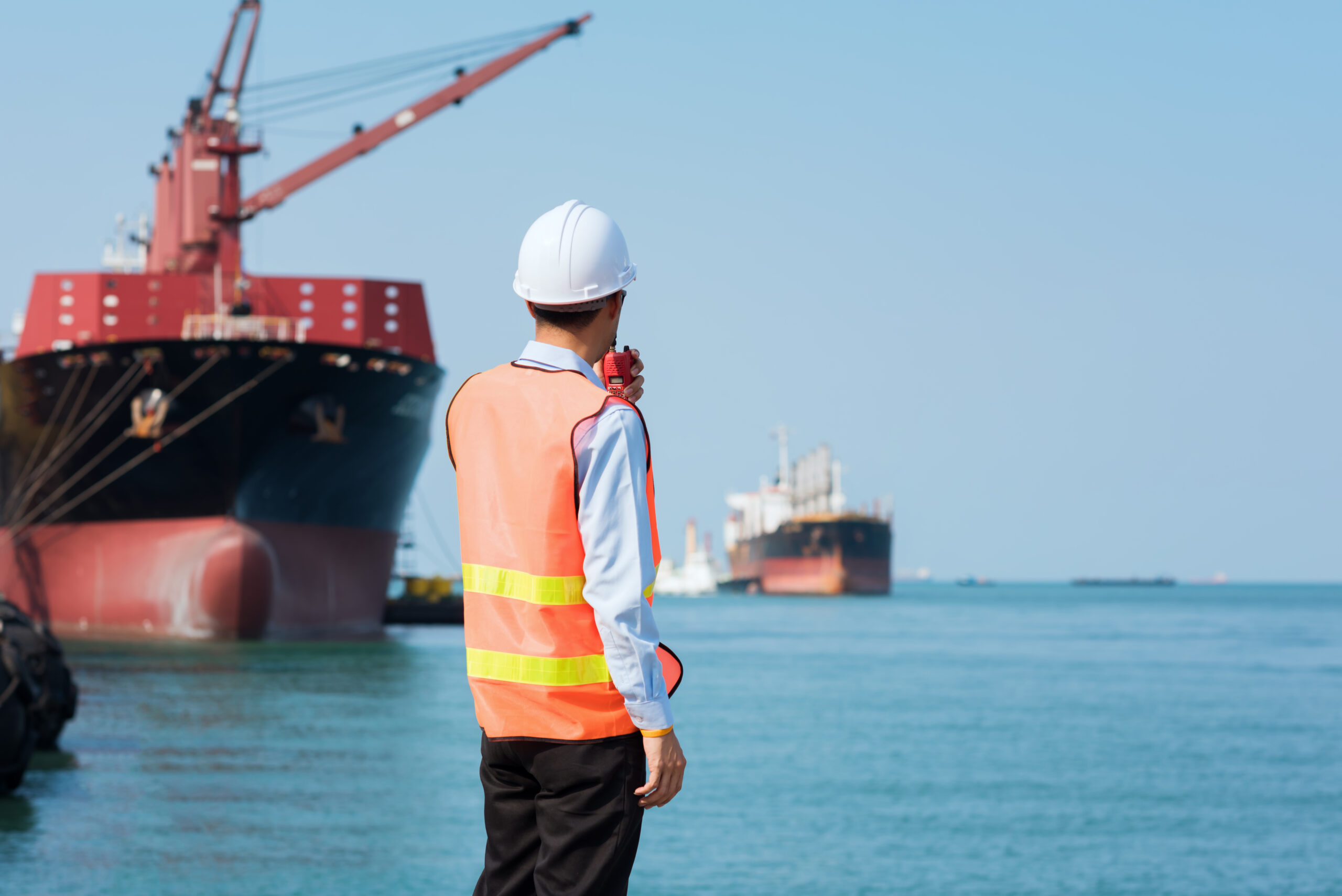
The sheer tension held by a commercial mooring line is difficult to comprehend until something goes wrong. Whether you are tying off a heavy cargo barge along the Theodore Industrial Canal or securing a massive container vessel in the Port of Mobile, line handling remains one of the most unpredictable tasks on the water.
When a synthetic rope parts under extreme load, the resulting snap-back happens faster than the human eye can track.
What Makes Mooring Lines So Dangerous to Deckhands?
Mooring lines operate under immense tension, holding thousands of tons of vessel weight. When a line parts, the stored kinetic energy releases instantly. The broken rope recoils through the snap-back zone at speeds exceeding 500 miles per hour, causing catastrophic crushing injuries, traumatic amputations, or fatal blunt force trauma.
The physics of a commercial mooring system create an environment with zero margin for error. A standard line securing a ship in Mobile Bay might be holding back thousands of tons of displacing force caused by shifting tides and relentless currents. Synthetic ropes, which are highly favored in the industry for their strength and buoyancy, stretch significantly under these heavy loads. This elasticity is exactly what makes them lethal.
Unlike old-fashioned wire cables that tend to drop relatively dead when they break, synthetic lines store massive amounts of kinetic energy. When that energy releases, the rope violently whips back toward its anchor point. The area swept by this recoiling rope is known as the snap-back zone. Because of the complex angles involved in passing a line through chocks and around bollards, predicting the exact path of a parting line is nearly impossible.
Crewmembers caught in the bight of the line or standing within the recoil path face life-altering trauma. Common physical consequences include:
- Traumatic limb amputations from the shearing force of the rope.
- Compound fractures of the legs, arms, and pelvis.
- Severe traumatic brain injuries from blunt force impact.
- Spinal cord damage resulting in partial or complete paralysis.
- Internal organ lacerations and massive internal bleeding.
How Does the Jones Act Protect Injured Line Handlers?
Under the Jones Act, an injured seaman can sue their employer for negligence following a mooring line accident. If the employer failed to provide a safe work environment, proper supervision, or adequate training regarding snap-back zones, they are held financially responsible for the resulting injuries.
Standard state workers’ compensation does not apply to crewmembers working on navigable waters. Instead, federal law provides a highly protective remedy. The protections found within the federal Jones Act give qualified seamen the right to file a direct lawsuit against their employer for negligence.
To win a claim, you only need to prove that the employer’s negligence played a part, no matter how small, in causing your injury. This is a much lower burden of proof than standard personal injury cases filed in state courts. If a captain rushed the unmooring process at a crowded dock in Bayou La Batre, or if the mate failed to clear the deck before putting tension on the capstan, the employer bears liability.
Examples of actionable employer negligence include:
- Failing to replace visibly frayed or chemically degraded synthetic lines.
- Ordering deckhands to work in known snap-back zones without a clear safety justification.
- Providing inadequate training on the specific hazards of the vessel’s mooring arrangement.
- Operating with an understaffed deck crew, forcing rushed line handling.
- Failing to establish clear communication protocols between the bridge and the deck.
What Is an Unseaworthiness Claim for a Parted Line?
General maritime law requires vessel owners to provide a seaworthy ship with safe, functioning equipment. If a mooring line fails under normal, expected use, the vessel is considered legally unseaworthy. The injured seaman can hold the shipowner strictly liable for damages, regardless of whether the employer was actively negligent.
Unseaworthiness is a completely separate legal concept from employer negligence. Under general maritime law, a vessel owner owes an absolute, non-delegable duty to provide a ship that is reasonably fit for its intended purpose. This duty extends to every piece of equipment on board, right down to the mooring ropes and deck hardware.
If a line snaps while being used for its normal, intended purpose under expected weather conditions in the Gulf of Mexico, the law presumes the equipment was defective. You do not necessarily have to prove that the owner knew the line was bad. The simple fact that it failed under standard tension can render the vessel unseaworthy.
Conditions that frequently support an unseaworthiness claim include:
- Using ropes with a lower breaking strength than required for the vessel’s tonnage.
- Deck winches or capstans that lack proper emergency stop mechanisms.
- Poorly maintained fairleads and chocks that chafe and degrade the ropes.
- Absence of non-skid surfaces on the deck where line handlers must stand.
- Missing or illegible warning signs marking dangerous snap-back zones.
Who Pays for Medical Bills After a Mooring Accident?
Through the maritime doctrine of Maintenance and Cure, a seaman injured by a mooring line has the absolute right to have their medical bills paid by the vessel owner. Additionally, they receive a daily living stipend until they reach maximum medical improvement, regardless of who caused the line to part.
Waiting for a lawsuit to resolve takes time, but your medical needs are immediate. Maritime law recognizes this reality through a centuries-old protection known as Maintenance and Cure. These are no-fault benefits, meaning you are entitled to them even if your own momentary mistake contributed to the accident.
Cure covers all reasonable and necessary medical expenses related to your injury. If you are rushed to USA Health University Hospital trauma center with crushed legs, the vessel owner must foot the bill for your surgeries, rehabilitation, and necessary medications. Maintenance provides a daily living allowance to cover your basic room and board while you are recovering off the vessel.
These benefits continue until a doctor determines you have reached maximum medical improvement. If an employer wrongfully denies or delays these payments, they can be penalized heavily by the court, sometimes resulting in punitive damages.
What Are the Common Causes of Mooring Line Failures?
Most mooring line failures result from preventable hazards, including worn or degraded synthetic ropes, defective winches, inadequate line management plans, or sudden excessive force from vessel engines. Poor weather conditions, unpredictable currents, and lack of communication between the bridge and deck crew also frequently contribute to snap-back disasters.
Despite strict industry standards, preventable line failures happen regularly along the Alabama coast. The primary culprit is often deferred maintenance. Synthetic ropes degrade over time due to ultraviolet light exposure, saltwater corrosion, and chemical exposure. A rope that looks intact on the outside may have severe internal structural damage.
The safety standards maintained by the Occupational Safety and Health Administration provide specific guidelines for the inspection and retirement of ropes and cables. When vessel operators ignore these standards to save money, they put their entire crew in mortal danger.
Beyond equipment failure, operational errors frequently cause extreme tension spikes that break lines. These errors include:
- Applying engine thrust before the deck crew has completely cast off the lines.
- Failing to monitor lines as the tide shifts dramatically in the Mobile River.
- Using a mixed mooring arrangement that distributes weight unevenly.
- Ignoring audible warnings, such as the loud creaking or groaning of a rope stretched beyond its safe working load.
- Inadequate communication between the tugboat operator and the barge crew during tight maneuvers.
Can Dockworkers Claim Jones Act Benefits for Mooring Injuries?
Land-based dockworkers and longshoremen injured by mooring lines generally do not qualify for Jones Act benefits. Instead, they must seek compensation through the Longshore and Harbor Workers Compensation Act. This federal law provides medical coverage and wage replacement for harbor workers injured on navigable waters or adjoining terminals.
The legal classification of your job dictates exactly which laws apply to your recovery. To qualify as a seaman under the Jones Act, you must spend a significant portion of your working time in service of a vessel in navigation.
If your job primarily keeps you on the concrete docks of the Theodore Industrial Canal tying up visiting cargo ships, you likely fall under a different legal framework. The Longshore and Harbor Workers Compensation Act protects maritime employees who load, unload, build, or repair vessels, but who are not considered traditional crewmembers.
While this system provides excellent medical coverage and a portion of your lost wages, it operates more like a traditional workers’ compensation structure. You generally cannot sue your direct employer for negligence under this act. However, if a defective line from a visiting vessel snaps and injures you on the dock, you may still have grounds to file a third-party negligence lawsuit against that specific vessel owner.
What Compensation Can You Recover for a Snap-Back Injury?
An injured seaman can recover comprehensive financial damages after a mooring line accident. Recoverable compensation includes past and future medical expenses, lost wages, diminished earning capacity, and physical pain and suffering. If the vessel owner acted with reckless disregard for safety, punitive damages may also be available.
The physical trauma of being struck by a parting line often requires years of reconstructive surgery and physical therapy. Many injured mariners can never return to the heavy physical labor required offshore. Because of this, the financial compensation available through a successful maritime lawsuit is designed to make you whole.
The knowledgeable legal team aggressively pursues all available categories of damages, which frequently include:
- Coverage for all past medical bills and projected future healthcare needs.
- Reimbursement for wages lost during your immediate recovery period.
- Compensation for the loss of your future earning capacity if you are permanently disabled.
- Substantial financial recovery for physical pain, mental anguish, and loss of quality of life.
- Vocational rehabilitation costs if you need to train for a new, light-duty career.
Where Are Maritime Injury Lawsuits Filed in Alabama?
Because admiralty law involves complex federal statutes, most major maritime injury claims on the Alabama Gulf Coast are filed in federal court. Specifically, these cases fall under the jurisdiction of the United States District Court for the Southern District of Alabama, located in downtown Mobile.
Choosing the right venue for a lawsuit is a strategic decision that deeply impacts the trajectory of your case. Admiralty law is a specialized domain governed by federal statutes and centuries of maritime precedent.
Most severe injury claims originating from incidents in the Port of Mobile or the surrounding Gulf waters are litigated at the John Archibald Campbell U.S. Courthouse. The federal judges in this district have extensive institutional experience handling the nuances of Jones Act negligence, vessel arrest procedures, and complex unseaworthiness claims.
A legal provision known as the saving to suitors clause sometimes gives injured seamen the option to file their claims in state courts, such as the Mobile County Circuit Court. Deciding whether state or federal court offers the advantage depends heavily on the specific facts of your accident, the identity of the corporate defendants, and the nature of the damages being claimed.
Why Should You Report a Mooring Injury Immediately?
Failing to report a mooring line injury immediately can jeopardize your legal rights and medical recovery. Prompt reporting ensures an official accident record is created, prevents the employer from destroying evidence like the parted rope, and establishes the timeline necessary to secure Maintenance and Cure benefits.
In the chaotic moments following a snap-back incident, securing medical help is the only priority. But once the immediate danger has passed, taking swift administrative action is vital to protect your financial future. Corporate safety officers begin building their defense the moment an accident happens; you must act just as quickly.
Taking the following steps establishes a strong foundation for your claim:
- Report the accident to the captain or ranking officer immediately, demanding that they log the incident.
- Fill out a formal, written accident report, ensuring you describe exactly what happened without accepting undue blame.
- Demand immediate off-vessel medical evaluation by an independent doctor, rather than relying solely on a company-appointed physician.
- Identify any crewmembers who witnessed the line part and secure their contact information.
- Take photographs of the broken rope, the winch, the deck conditions, and your visible injuries if you are physically able to do so.
How Long Do You Have to File a Maritime Injury Claim?
Under the Uniform Statute of Limitations for Maritime Torts, an injured seaman generally has three years from the date of the mooring line accident to file a federal lawsuit. Failing to take legal action within this strict timeframe usually results in a permanent loss of the right to seek financial compensation.
The clock starts ticking the moment the injury occurs. While three years might sound like a generous amount of time, delaying legal action is incredibly risky. Evidence degrades quickly in the marine environment.
A broken synthetic line might be quietly thrown into a dumpster at the next port call. Crewmembers who witnessed the accident might transfer to different companies, making them difficult to track down for depositions. Voyage data recorders and digital bridge communications are routinely overwritten. Engaging legal representation early ensures that vital evidence is preserved through formal preservation letters and aggressive investigation.
Protecting Injured Mariners on the Gulf Coast
A severe mooring line accident completely alters the course of your life. The corporate vessel owners have dedicated risk management teams fighting to limit your financial recovery. You need an experienced advocate standing by your side. Our attorneys at Fuquay Law Firm represent injured deckhands, engineers, and harbor workers across the Alabama coast. We handle these complex maritime claims on a contingency fee basis, meaning you owe zero attorney fees unless we successfully recover compensation for you. Contact us today to schedule your free, confidential consultation.
Frequently Asked Questions
1. Does a snapped mooring line always mean the vessel was unseaworthy?
While a line snapping under normal tension is a strong indicator of unseaworthiness, it is not an absolute guarantee. The vessel owner may attempt to prove the line failed due to an unforeseeable extreme weather event or an unpredictable natural occurrence. However, the legal presumption leans heavily in favor of the injured seaman when standard equipment fails.
2. Can I sue if my employer claims I was standing in the snap-back zone?
Yes, you can still pursue a claim even if you were inside the designated snap-back zone. Maritime law applies the doctrine of comparative fault, meaning your compensation might be reduced by your percentage of blame, but you are not completely barred from recovery. We often find that crewmembers were forced to stand in dangerous zones due to poor deck layouts or understaffing.
3. How does LHWCA differ from the Jones Act for line handling injuries?
The Jones Act requires you to prove employer negligence but allows for full recovery of lost earning capacity and pain and suffering damages. The LHWCA is a no-fault workers’ compensation system that pays a scheduled percentage of your lost wages and covers medical bills, but it generally prevents you from suing your direct employer for negligence.
4. What happens if the employer disposes of the broken mooring rope?
If an employer intentionally destroys or throws away the broken line after an injury, the court may issue a spoliation of evidence instruction. This allows the judge or jury to legally presume that the destroyed rope would have proven your claim of defective equipment.
5. Will filing a maritime injury lawsuit end my career on the water?
Many injured seamen worry about industry blacklisting after speaking out. Federal law strictly prohibits employers from retaliating against mariners who exercise their legal rights. Our legal team aggressively pursues maximum compensation so that you have financial security regardless of whether you choose to return to the maritime industry.
