Alabama Maritime Construction Worker Injury Lawyers

Practice Areas

Alabama Maritime Construction Worker Injury Lawyers

Building bridges across Mobile Bay, repairing piers at the Alabama State Docks, or dredging the shipping channels of the Gulf Coast requires a specific breed of worker. This is not typical construction work. The environment is unstable, the machinery is massive, and the presence of water introduces hazards that land-based construction crews never face. 

When an injury occurs on a maritime construction project, the path to compensation is rarely straightforward. You are likely not covered by standard Alabama state workers’ compensation. Instead, your rights fall under a complex web of federal laws, including the Jones Act and the Longshore and Harbor Workers’ Compensation Act (LHWCA). Identifying which law applies to your specific situation is the first and most important step in securing your financial future. 

The Unique Dangers of Marine Construction Projects

Maritime construction combines the heavy industrial risks of a construction site with the unpredictable nature of the open water. Workers on these sites face a “double threat” of hazards. You are dealing with cranes, pile drivers, and welding equipment, but you are doing so on shifting barges, slippery docks, or underwater. 

The Occupational Safety and Health Administration (OSHA) and the Coast Guard enforce strict safety regulations, yet accidents happen frequently due to negligence, equipment failure, or pressure to meet deadlines. 

Common hazards specific to this industry include: 

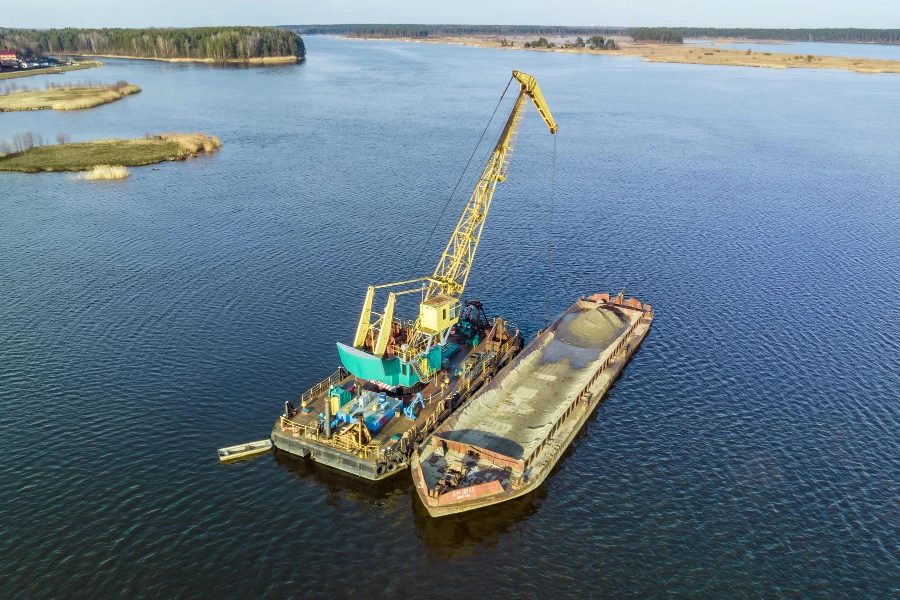
  • Working from Floating Platforms: Many projects require cranes and excavators to operate from spud barges or jack-up rigs. If the barge is not properly secured or if the load is unbalanced, the entire platform can capsize or list, throwing workers and equipment into the water. 
  • Dredging Operations: Dredging the Mobile River and surrounding channels involves massive pumps, cutter heads, and winches. Cables under extreme tension can snap, causing catastrophic amputations or blunt force trauma. 
  • Commercial Diving Risks: Underwater construction and inspection expose divers to decompression sickness, equipment malfunction, and the risk of being pinned by shifting debris or underwater structures. 
  • Transfer Accidents: Getting from a crew boat to a barge or from a dock to a vessel is one of the most dangerous moments of the day. Falls into the water between vessels can lead to crushing injuries or drowning. 

Classifying Your Legal Status: Jones Act Seaman vs. Harbor Worker

The most confusing aspect of a maritime construction injury is determining your legal status. Unlike a land-based carpenter or electrician who automatically falls under state workers’ comp, a maritime construction worker usually falls into one of two federal categories. The compensation available to you depends entirely on this classification. 

The Jones Act Seaman 

If you spend a significant amount of your working time (generally 30% or more) contributing to the mission of a vessel or a fleet of vessels in navigation, you may qualify as a “seaman.” In construction, this often applies to: 

  • Crew members of dredge boats. 
  • Workers stationed on floating cranes or jack-up rigs that move from site to site. 
  • Tugboat operators assisting construction barges. 
  • Pile drivers who work primarily from a floating vessel. 

The Longshore and Harbor Worker

If your work is maritime in nature but you do not meet the criteria for a seaman, you likely fall under the Longshore and Harbor Workers’ Compensation Act (LHWCA). This typically covers: 

  • Dock builders and pier repair crews. 
  • Workers building bridges over navigable water. 
  • Stevedores and terminal workers handling construction materials. 
  • Shipbuilders and ship repairers in dry docks. 


Distinguishing between these two statuses is not always clear. A worker might spend part of the day on a barge and part of the day on the pier. Courts look at the “totality of circumstances” to make this determination. We assist clients in evaluating their daily duties to ensure they file under the correct statute. 

Rights and Remedies Under the Jones Act

If you qualify as a seaman, the Jones Act provides you with the right to sue your employer for negligence. This is a significant departure from standard workers’ compensation, which bars lawsuits against employers. To win a Jones Act claim, you must prove that your employer’s negligence played a part, however slight, in causing your injury. 

Examples of employer negligence in construction settings include: 
  • Failing to provide proper safety gear, such as life vests or harnesses. 
  • Ordering work to continue during dangerous weather conditions in the Gulf. 
  • failing to maintain non-skid surfaces on barges, leading to slips and falls. 
  • Providing tools or heavy machinery that are in disrepair. 
  • Inadequate training for crew members operating complex dredging or lifting equipment. 

Unseaworthiness Claims

In addition to negligence, a seaman may bring a claim for unseaworthiness against the vessel owner. A vessel is considered unseaworthy if it, its equipment, or its crew is not reasonably fit for its intended purpose. If a piece of equipment breaks or if a fellow crew member is not competent to perform their job, the vessel may be unseaworthy. This is a strict liability claim, meaning you do not need to prove the owner was negligent, only that the condition existed and caused your injury. 

Benefits Under the Longshore and Harbor Workers’ Compensation Act (LHWCA)

For those who do not qualify as seamen, the LHWCA serves as a federal workers’ compensation system. It is generally more generous than Alabama state workers’ compensation. It is a “no-fault” system, meaning you do not need to prove your employer did anything wrong to receive benefits. You only need to show that the injury occurred in the course and scope of your employment on or near navigable waters. 

Key benefits provided by the LHWCA include: 
  • Medical Expenses: The act covers all reasonable and necessary medical treatment related to the injury. You have the right to choose your own treating physician, a vital protection that prevents employers from steering you to “company doctors.” 
  • Temporary Total Disability (TTD): If you are unable to work while recovering, you are entitled to two-thirds of your average weekly wage. 
  • Permanent Partial Disability (PPD): If you suffer a permanent impairment, such as the loss of use of a limb or hearing loss, you are entitled to a scheduled award based on the severity of the impairment. 
  • Vocational Rehabilitation: If your injury prevents you from returning to your previous maritime construction job, the Department of Labor may provide vocational rehabilitation services to help you find new employment. 

Third-Party Liability in Maritime Construction

Construction sites are multi-employer worksites. You might work for a general contractor, but there are often subcontractors, equipment rental companies, engineers, and vessel operators working alongside you. If your injury was caused by someone other than your direct employer, you may have a “third-party claim.” 

Potential third parties in maritime construction accidents include: 
  • Equipment Manufacturers: If a crane boom collapses due to a design defect or a winch fails due to manufacturing errors, the manufacturer can be held liable. 
  • Vessel Owners: If you are a longshore worker injured on a vessel owned by a different company, you may have a claim under Section 905(b) of the LHWCA for vessel negligence. 
  • Subcontractors: If a separate electrical contractor leaves live wires exposed or a dredging company creates a hazard that injures a bridge builder, the negligent company is responsible for the damages. 
  • Architects and Engineers: If a structural collapse occurs due to faulty engineering plans, the firm responsible for those plans may be liable. 

A third-party lawsuit allows you to recover damages that are not available under the LHWCA, such as pain and suffering, mental anguish, and full loss of earning capacity. 

Common Injuries on Alabama Waterfront Job Sites

The physical toll of maritime construction is immense. The injuries we see often require surgery, long-term physical therapy, and can end a career. 

We frequently assist workers suffering from: 
  • Traumatic Brain Injuries (TBIs): Caused by swinging crane loads, falling objects, or falls from heights. 
  • Spinal Cord Injuries: Herniated discs and vertebrae fractures resulting from heavy lifting, slips on wet decks, or falls. 
  • Crush Injuries: Limbs getting caught between barges and docks, or in heavy gears and winches. 
  • Chemical Burns and Toxic Exposure: Exposure to industrial chemicals, welding fumes, or hazardous materials dredged from the riverbed. 
  • Hypothermia and Drowning: Falling into cold water during winter months or getting trapped underwater. 

The Importance of Prompt Medical and Legal Action

After an accident, the actions you take immediately can impact your ability to recover compensation. 

Report the Injury Immediately 

Notify your supervisor of the accident right away. If you are under the LHWCA, you generally have 30 days to provide notice, but waiting creates doubt. Ensure an accident report is filed and request a copy. 

Seek Independent Medical Attention 

Do not rely solely on an on-site medic or a doctor recommended by your employer. See a doctor who works for you. Be honest about how the injury happened and all the symptoms you are experiencing. 

Preserve Evidence 

If possible, take photos of the scene, the equipment involved, and your injuries. Get the names and phone numbers of any witnesses who saw the accident. Equipment on construction sites changes daily; documentation is vital. 

Be Wary of Recorded Statements 

Insurance adjusters for the construction company or the vessel owner may ask for a recorded statement. They are trained to ask questions that can minimize your claim or shift the blame to you. You are under no obligation to give a recorded statement without legal counsel present. 

Why Local Knowledge Matters in Alabama Maritime Cases

Maritime construction in Alabama is centered around specific hubs like the Port of Mobile, the shipyards along the Mobile River, and the Intracoastal Waterway. A lawyer handling these cases needs to know more than just the law; they need to know the landscape. 

We are familiar with the specific companies operating in our waters, the local medical providers who treat maritime injuries, and the judges who preside over federal and state courts in the region. We know the difference between a spud barge and a jack-up rig, and we know why that distinction matters to your case. 

Navigating the intersection of state law, the Jones Act, and the LHWCA requires a deep familiarity with federal statutes. Filing a claim under the wrong act can lead to delays or a denial of benefits. We ensure that every potential avenue for compensation is explored, whether it is a maintenance and cure claim, a 905(b) vessel negligence suit, or a product liability action. 

Recoverable Damages for Injured Workers

The compensation you receive depends on the legal framework of your claim. 

For Jones Act Seamen 
  • Maintenance and Cure: Daily living expenses and medical costs until maximum medical improvement. 
  • Lost Wages: Past and future loss of income. 
  • Pain and Suffering: Compensation for physical pain and emotional distress. 
  • Loss of Enjoyment of Life: Damages for the inability to participate in hobbies or family activities. 
For LHWCA Claimants 
  • Medical Benefits: Full coverage for injury-related care. 
  • Disability Payments: A percentage of lost wages based on the degree of disability (temporary vs. permanent). 
  • Vocational Retraining: Costs associated with learning a new trade. 
  • Third-Party Damages: If a third party is liable, you can recover pain and suffering and full lost wages through a separate lawsuit. 

Contact Our Alabama Maritime Construction Injury Lawyers

If you have been injured while building or maintaining Alabama’s maritime infrastructure, you are facing powerful opponents. Construction companies and their insurers act quickly to protect their profits. You need a legal team that moves just as fast to protect your rights. At Fuquay Law Firm, we are committed to helping injured workers in Mobile and across the Gulf Coast rebuild their lives. We handle the complex legal filings and aggressive negotiations so you can focus on your recovery. 

Contact us today at (251) 473-4443 for a free, confidential consultation. Let us review the facts of your accident, determine your legal status, and fight for the full compensation you are owed. 

Frequently Asked Questions (FAQs)

What is the difference between a Jones Act claim and a workers' compensation claim?

The main difference is the requirement of fault. Standard workers’ compensation is a “no-fault” system where you receive benefits regardless of who caused the accident, but you generally cannot sue your employer. The Jones Act allows “seamen” to sue their employer for negligence. If the employer was at fault, a Jones Act claim can provide significantly higher compensation, including damages for pain and suffering, which are not available in workers’ compensation. 

Yes. Under the Longshore and Harbor Workers’ Compensation Act (LHWCA), you have the right to choose your initial treating physician. Your employer may try to direct you to a specific clinic, but you are not required to go there for ongoing treatment. Under the Jones Act, you also generally have the right to see a doctor of your choice to ensure you receive an unbiased diagnosis and proper care. 

You can still recover damages. Maritime law uses a standard called “comparative negligence.” This means that even if you were 20% or 30% responsible for the accident, you can still sue for the remaining percentage of damages caused by your employer or a third party. Under the LHWCA, your own negligence generally does not bar you from receiving medical and wage benefits at all. 

The time limits, or statutes of limitations, vary by the specific law. Generally, a Jones Act lawsuit must be filed within three years of the date of injury. Claims under the LHWCA should be reported to the employer within 30 days, and a formal claim must be filed within one year. Because these deadlines are strict and exceptions can apply, it is vital to speak with an attorney as soon as possible. 

Yes, in most cases. The LHWCA covers injuries that occur on navigable waters or adjoining areas like piers, wharves, and terminals. Building a bridge over navigable water typically falls under this jurisdiction. However, if you are working from a floating barge on the bridge project, you might alternatively qualify as a Jones Act seaman. This overlap is why professional legal analysis of your specific job duties is necessary. 

Our attorneys are here to help you recover the compensation you need and deserve.

Have you been injured on any of these vessels?

Testimonial of few folks

Serving Alabama

associates

Preeminent
Super lawyers
The National trial Lawyers