
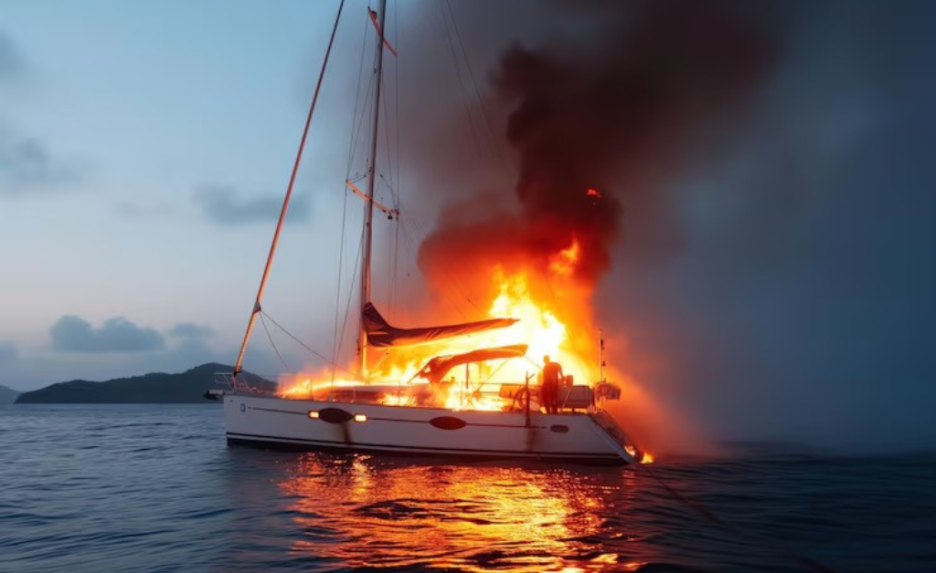
A vessel at sea is a self-contained world, a place of immense power and industrial activity. It is also a place where the risk of a severe burn injury is a constant and serious threat. When a fire erupts in an engine room, a steam pipe bursts, or caustic chemicals spill, there is no immediate access to an emergency room. Seamen are left to depend on the vessel’s available resources and the crew’s training, often miles from shore. The moments and hours following a burn injury at sea can be harrowing, and the path to physical and financial recovery is frequently complex and challenging.
Navigating the aftermath of a significant burn injury involves more than just medical care; it requires a detailed inquiry into the legal protections afforded to maritime workers.
Common Causes of Burn Injuries on Vessels
The confined and industrial nature of a maritime work environment creates numerous scenarios where severe burns can occur. These injuries are rarely simple accidents; they are often the result of specific failures, inadequate safety measures, or defective equipment. Identifying the cause is a vital first step in establishing a legal claim.
Common sources of shipboard burn injuries include:
- Engine Room Fires and Explosions: The engine room is a concentration of heat, fuel, and high-pressure systems. A failure in a fuel line, an oil spray onto a hot surface, or an electrical short can lead to a catastrophic fire or explosion, causing devastating thermal burns.
- Electrical Burns: Improperly maintained or repaired electrical equipment, frayed wiring, inadequate grounding, and failure to follow lockout/tagout procedures can result in high-voltage electrical burns, which cause severe damage to both surface tissue and internal organs.
- Steam and Hot Water Burns: Leaking or bursting pipes carrying superheated steam or hot water present a significant scalding hazard. These incidents can happen in engine rooms, galleys, or laundry facilities and can cause widespread, severe burns in an instant.
- Chemical Burns: Many vessels carry hazardous and corrosive chemicals, such as cleaning agents, solvents, rust inhibitors, or cargo. Improper storage, lack of appropriate personal protective equipment (PPE), or spills during transfer can lead to chemical burns that can progressively worsen without immediate, correct treatment.
- Galley and Kitchen Fires: The ship’s galley contains commercial cooking equipment, including deep fryers and gas ranges. Grease fires, equipment malfunctions, or simple negligence can lead to serious thermal burns for cooks and other crew members.
- “Hot Work” Accidents: Welding, cutting, and brazing operations, known as “hot work,” are inherently dangerous. Failure to obtain a proper hot work permit, clear the area of flammable materials, or provide a necessary fire watch can easily ignite nearby materials, injuring the worker and others.
- Contact with Hot Surfaces: Many surfaces on a vessel, from engine components and exhaust stacks to hydraulic lines and steam pipes, operate at extreme temperatures. Inadequate insulation, missing safety guards, or being forced to work in dangerously tight quarters can lead to severe contact burns.
Your Immediate Rights: The Doctrine of Maintenance and Cure
One of the oldest and most fundamental rights of a seaman is the right to “maintenance and cure.” This is a form of no-fault benefit that a vessel owner or employer must provide to a seaman who becomes injured or ill while in the service of the vessel. It is an automatic right and does not require the seaman to prove that the employer was negligent. For a burn victim, these benefits are a vital lifeline.
- Cure: This is the employer’s duty to pay for all reasonable and necessary medical expenses related to the burn injury. This includes everything from initial emergency care and hospitalization to follow-up treatments, surgeries (like skin grafts), physical therapy, medication, and psychological counseling. The employer’s obligation continues until the seaman reaches “Maximum Medical Improvement” (MMI), the point at which further medical treatment is not expected to improve the condition.
- Maintenance: This is a daily stipend intended to cover the seaman’s basic living expenses—room and board—while recovering ashore. It replaces the food and lodging that would have been provided aboard the vessel.
While maintenance and cure are an absolute right, disputes are common. Employers may try to terminate benefits prematurely by declaring a seaman at MMI against a treating doctor’s opinion, or they may challenge the necessity of a recommended treatment. They might also attempt to pay a low, outdated rate for maintenance that does not cover the seaman’s actual living costs. An employer who unreasonably denies these benefits can be held liable for additional damages.
Proving Negligence Under the Jones Act
While maintenance and cure provide for immediate needs, they do not compensate for other significant losses like pain, suffering, disfigurement, or lost earning capacity. To recover these damages, an injured seaman must typically file a claim under a federal law known as the Jones Act.
The Jones Act allows a seaman to sue their employer for injuries resulting from the employer’s negligence. The vessel owner, the captain, and even a fellow crew member’s negligence can be attributed to the employer. One of the most significant aspects of the Jones Act is its standard for proving causation. A seaman only needs to show that the employer’s negligence played any part, no matter how small, in causing the injury. This is a more lenient standard than in typical land-based injury cases.
Examples of employer negligence that can lead to a burn injury claim include:
- Failing to maintain a safe working environment, such as allowing oily rags or flammable debris to accumulate in the engine room.
- Providing defective or poorly maintained equipment, like a faulty valve on a steam line or a frayed electrical cord.
- Failing to provide the crew with adequate training on fire prevention and response.
- Not supplying proper and sufficient personal protective equipment (PPE), such as heat-resistant gloves, face shields, or chemical-resistant aprons.
- Understaffing the vessel, leading to crew fatigue and unsafe work practices.
- Issuing negligent orders, such as demanding that a crew member rush a dangerous job or work near an unprotected heat source.
Even with the “featherweight” causation standard, collecting the evidence needed to prove negligence can be a challenge. The employer controls the vessel, the evidence, and the potential witnesses, making it important to act quickly to preserve proof of the unsafe conditions.
The Unseaworthiness Doctrine: A Breach of Absolute Duty
Separate from a negligence claim under the Jones Act is a claim based on the doctrine of unseaworthiness. General maritime law imposes an absolute and non-delegable duty upon the vessel owner to provide a vessel, crew, and equipment that are reasonably fit for their intended purpose.
Unseaworthiness is a form of strict liability. This means the injured seaman does not need to prove the vessel owner was negligent or even knew about the hazardous condition. The only thing that matters is whether an unseaworthy condition existed and whether that condition caused the burn injury.
A vessel can be deemed unseaworthy due to various conditions that lead to burns:
- Defective Equipment: A fire pump that fails to operate, a malfunctioning fire suppression system, or a boiler with a known defect can all render a vessel unseaworthy.
- Lack of Safety Gear: The absence of appropriate fire extinguishers, fire-resistant blankets, or other vital safety equipment makes a vessel unfit for its purpose.
- Improper Design or Layout: A poorly designed engine room that lacks adequate escape routes or places flammable lines too close to ignition sources can be an unseaworthy condition.
- Incompetent or Inadequately Trained Crew: If a crew member’s lack of training in handling flammable liquids or responding to a galley fire contributes to an injury, the vessel could be considered unseaworthy due to an unfit crew.
- Unsafe Work Policies: If the standard practice on the ship is to bypass safety procedures, such as failing to issue hot work permits, this can create an unseaworthy condition.
Proving unseaworthiness often involves a detailed investigation into the vessel’s maintenance history, equipment records, and operational procedures, and may require testimony from maritime safety professionals.
Damages Recoverable in a Maritime Burn Claim
A severe burn is a devastating injury with lifelong consequences. The goal of a maritime injury claim under the Jones Act or the unseaworthiness doctrine is to secure compensation that addresses the full scope of the harm. Recoverable damages can include:
- Past and Future Medical Expenses: This covers all costs related to the burn, from the initial emergency treatment to future needs like reconstructive surgery, skin grafts, physical therapy, and pain management.
- Lost Wages: Compensation for the income lost while unable to work.
- Loss of Future Earning Capacity: If the burn injury results in a permanent disability that prevents a return to previous work as a seaman, damages can be awarded for the diminished ability to earn a living over a lifetime
- Pain, Suffering, and Mental Anguish: This compensates for the intense physical pain of the burn itself, the grueling treatment process, and the emotional and psychological trauma of the event.
- Disfigurement and Scarring: Burns often leave permanent and prominent scars. Damages can be awarded for the physical disfigurement and the associated humiliation and emotional distress.
The Importance of Preserving Evidence
In any maritime injury claim, but especially in cases involving fires or explosions, evidence can be lost or altered quickly. Taking prompt action to document the incident is vital. Important evidence in a burn injury case may include:
- Photographs and Videos: Capturing images of the accident scene, the defective equipment, the lack of safety gear, and the injuries themselves is powerful proof.
- Witness Statements: Getting contact information and statements from fellow crew members who saw what happened is essential.
- Vessel Logs and Records: The ship’s official log, engine room logs, maintenance records, and safety meeting reports can contain key information about the vessel’s condition and the events leading to the injury.
- Personal Notes: The injured seaman should write down everything they remember about the incident as soon as possible, including conversations with supervisors and what they were ordered to do.
- Preservation of Equipment: Taking steps to ensure that the faulty equipment or part that caused the injury is not repaired, discarded, or “lost” is important for later inspection by a qualified professional.
Protect Your Rights After a Burn Injury at Sea
If you are a seaman who has suffered a burn injury while in the service of a vessel, the physical, emotional, and financial burdens can feel overwhelming. If you or a loved one has been harmed in a maritime burn incident, please contact Fuquay Law Firm for a confidential consultation to learn more about your legal rights and options. We are committed to helping injured mariners navigate these difficult challenges and pursue the resources needed to rebuild their lives.
