
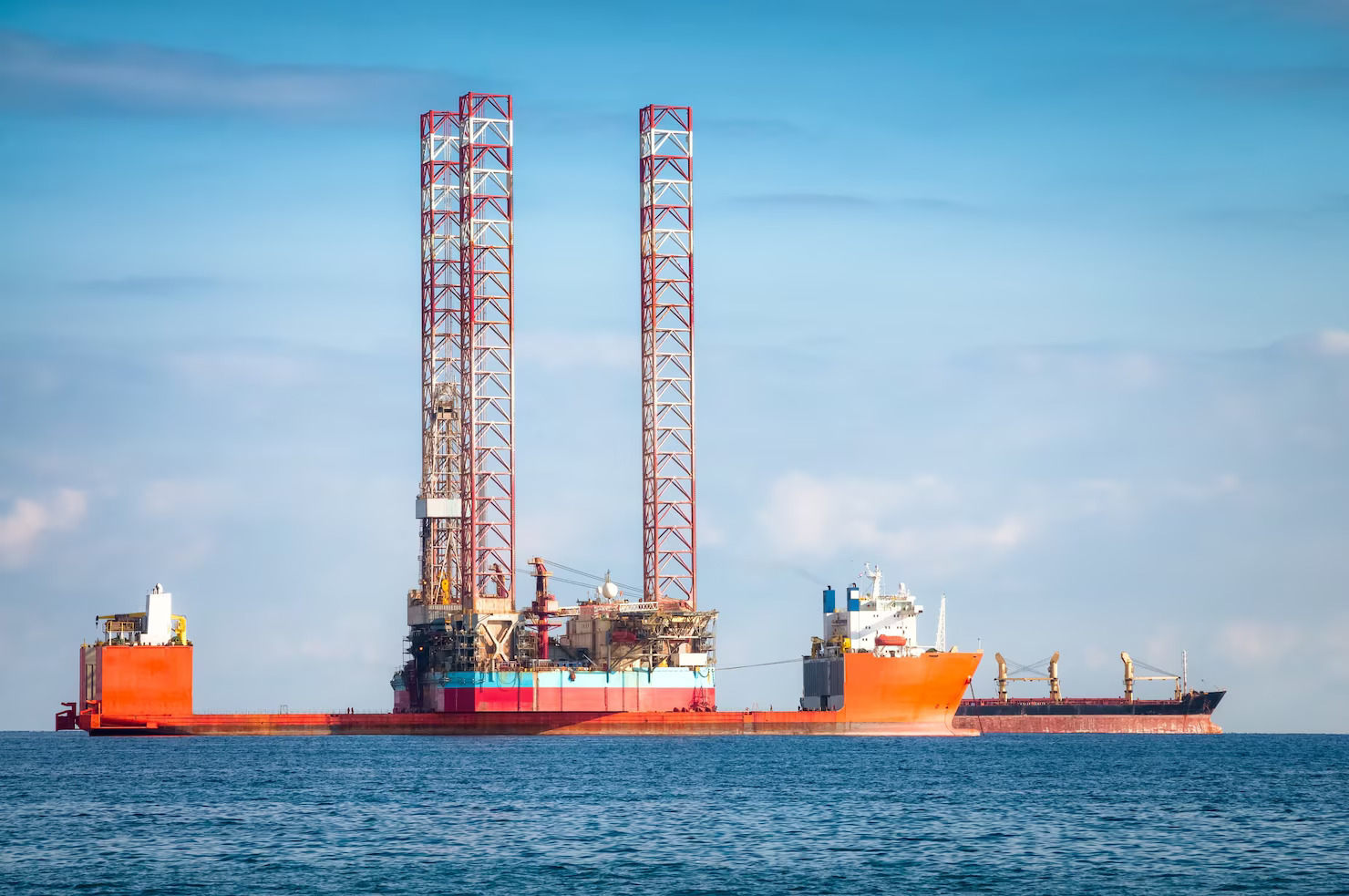
The daily commute for thousands of hardworking men and women on the Alabama Gulf Coast does not involve highways or traffic lights. Instead, it involves boarding crew boats in Bayou La Batre or Dauphin Island and heading miles offshore into the open waters of the Gulf of Mexico. Working on an offshore structure is an inherently dangerous occupation. Heavy machinery, high-pressure pipelines, volatile chemicals, and unpredictable weather create a hazardous environment where a single safety failure can result in a life-altering catastrophe.
When a catastrophic accident occurs, injured workers and their families immediately face a barrage of legal hurdles. Insurance companies and corporate defense teams routinely attempt to minimize financial payouts by aggressively contesting jurisdiction. The very first question that arises in an offshore injury claim is often geographical and structural: where exactly did the accident happen, and what type of structure were you standing on?
How Does Maritime Law Define a Commercial Vessel?
Under federal maritime law, a vessel must be practically capable of being used for transportation on water. Structures designed to move personnel or equipment across navigable waters qualify, which grants injured crew members the right to file specific claims under the Jones Act against their employers.
The statutory foundation for determining what constitutes a ship begins with the federal code. Under 1 U.S.C. Section 3, the government defines a vessel as every description of watercraft or other artificial contrivance used, or capable of being used, as a means of transportation on water. While this definition seems broad, courts apply strict standards when interpreting transportation capability.
A structure does not need to be actively moving at the exact moment of an injury to retain its status. For example, a commercial supply ship tied to a dock in the Mobile Ship Channel is still legally considered a vessel. Similarly, a floating barge temporarily anchored while loading cargo retains its transportation designation. The critical factor is whether the structure’s primary purpose involves moving people, goods, or equipment across navigable waters.
When an offshore worker qualifies as a crew member on one of these floating structures, they are legally classified as a seaman. This status is highly protective. It unlocks the ability to file a fault-based lawsuit directly against an employer for failing to provide a safe working environment. Establishing this legal status requires demonstrating a substantial connection to a fleet that is actively in navigation.
Why Are Fixed Offshore Platforms Classified as Artificial Islands?
Fixed offshore platforms are permanently bolted to the ocean floor and cannot move across the water. Because they lack transportation capabilities, federal courts classify stationary rigs as artificial islands rather than vessels, significantly changing which maritime laws protect the workers stationed on them.
Stationary drilling and production rigs are massive feats of industrial engineering. Unlike ships, these structures are constructed with enormous steel jackets that are permanently driven deep into the seabed. They do not have hulls, helms, navigation systems, or propulsion engines. Once they are constructed and secured in place, they remain at those specific coordinates for decades until they are eventually decommissioned.
Because a stationary platform is physically attached to the earth and fundamentally incapable of independent movement, the law views it as an extension of the land. It is not moving cargo; it is extracting resources from a fixed location. This permanent attachment completely strips the structure of any transportation capability, preventing it from meeting the federal definition of a watercraft.
It is vital to distinguish these stationary structures from Mobile Offshore Drilling Units (MODUs). MODUs, such as jack-up rigs, drillships, and semi-submersibles, are designed to float from one drilling site to another. Even when a jack-up rig lowers its legs to rest on the seafloor during operations, it retains its legal classification as a vessel because its foundational design allows for transportation. The distinction between a bolted structure and a mobile rig dictates the entire legal strategy following an accident.
How Have Supreme Court Rulings Impacted Platform Classifications?
The United States Supreme Court consistently rules that structures permanently secured to the seabed are not vessels in navigation. This means workers injured on fixed platforms cannot claim seaman status, altering the legal pathway they must take to secure financial recovery after an accident.
The legal treatment of stationary rigs was firmly established by the highest court in the nation. In the landmark decision of Rodrigue v. Aetna Casualty, the justices concluded that fixed offshore platforms permanently attached to the seabed must be treated as artificial islands. The Court reasoned that these structures are essentially islands built for industrial purposes, and they do not fall under traditional admiralty jurisdiction designed for navigating ships.
This ruling has profound implications for injured oil and gas workers. Because a stationary rig is an artificial island, the individuals working on it are not seamen. Without seaman status, an injured roustabout or crane operator cannot file a traditional negligence lawsuit against their direct employer under standard maritime statutes. Instead, they must look to an entirely different set of federal protections enacted specifically for the offshore extraction industry.
How Does OCSLA Protect Injured Offshore Workers in The Gulf of Mexico?
Recognizing that artificial islands sit in federal waters outside the immediate jurisdiction of any state, Congress needed a mechanism to govern the workers stationed there. They enacted the Outer Continental Shelf Lands Act to explicitly extend the political and legal jurisdiction of the United States to the subsoil, seabed, and all artificial islands erected on the Outer Continental Shelf.
OCSLA operates as a powerful protective shield for offshore personnel. It mandates that companies operating on the Outer Continental Shelf provide federally administered medical coverage and wage replacement benefits for injured employees. This ensures that a worker crushed by heavy piping or burned in an electrical fire does not have to rely on inferior state-level compensation programs.
Furthermore, OCSLA provides a clear legal avenue for victims to hold negligent third parties accountable. While you generally cannot sue your direct employer due to the exclusive remedy provision of workers’ compensation, you can file a civil lawsuit against equipment manufacturers, scaffolding contractors, or maintenance companies whose negligence caused your injuries.
When Does Alabama State Law Apply to Offshore Platform Injuries?
Federal maritime law does not have an extensive set of personal injury rules designed for stationary land-like structures. To fill this jurisdictional gap, OCSLA strategically borrows the civil laws of the state located closest to the offshore platform. This legal mechanism transforms adjacent state law into surrogate federal law.
For rigs located in the eastern Gulf of Mexico, this often means applying the laws of the State of Alabama. If a defective valve fails on a rig off the coast of Mobile Bay, causing a catastrophic blowout, the ensuing litigation will rely on Alabama tort law to establish liability, determine negligence, and calculate damages. This integration requires skilled legal counsel who intimately understands both federal offshore regulations and Alabama civil procedures, as cases may ultimately be litigated in the Mobile County Circuit Court or federal venues.
Should You File a Jones Act or OCSLA Claim for A Platform Injury?
You must file a Jones Act claim if you are a seaman injured on a moving vessel, such as a crew boat. However, if your injury occurs on a fixed offshore platform, your legal remedy falls under OCSLA, which requires a different claims process.
Injured workers do not get to simply choose which law they prefer. The physical location of the accident and your assigned job duties dictate the applicable legal framework. Attempting to file the wrong type of claim will lead to immediate case dismissal. Understanding the distinct differences between these two systems is critical for your financial recovery:
- Employer Lawsuits: Under the Jones Act, a seaman can sue their direct employer for negligence. Under OCSLA, workers are generally barred from suing their employer and must rely on third-party claims.
- Burden of Proof: A Jones Act claim only requires proving featherweight negligence—meaning the employer’s mistake contributed to the injury even in the slightest degree. OCSLA third-party claims require proving standard negligence based on state law.
- Structure Classification: The Jones Act strictly requires the injury to be connected to a vessel in navigation. OCSLA applies specifically to fixed structures and the seabed.
- Available Benefits: Seamen receive Maintenance and Cure, which pays living stipends and medical bills. OCSLA workers receive Longshore Act benefits, which follow strict statutory payment schedules.
Corporate defense attorneys frequently exploit confusion over these classifications. If you are injured while transferring from a moving crew boat onto a fixed platform ladder, highly complex jurisdiction disputes arise. Establishing the correct legal standing immediately after the incident prevents insurance carriers from denying your valid claims.
Does The Longshore Act Cover Workers On Stationary Rigs?
Yes, OCSLA explicitly extends the benefits of the Longshore and Harbor Workers’ Compensation Act to employees working on fixed platforms on the Outer Continental Shelf. This provides injured workers with no-fault medical coverage and a percentage of their lost wages during recovery.
The Longshore and Harbor Workers’ Compensation Act (LHWCA) is a powerful federal program initially designed for dockworkers and shipbuilders. However, Section 1333(b) of OCSLA specifically incorporates the LHWCA to cover non-seamen injured on stationary rigs. This extension guarantees that platform workers receive medical and financial support regardless of who caused the accident.
Because the LHWCA is a no-fault system, you do not need to prove that your employer was negligent to receive immediate benefits. If you suffer a severe spinal injury from a falling drill pipe, the system is designed to trigger automatically. The LHWCA covers all reasonable and necessary medical treatments related to your offshore injury, from emergency airlift evacuations to long-term physical therapy and reconstructive surgeries.
Additionally, the Act provides substantial wage replacement while you are physically unable to work. Injured personnel typically receive two-thirds of their average weekly wage. For permanent injuries, such as the loss of a limb or severe vision impairment, the LHWCA utilizes a specific schedule of impairments to calculate long-term disability payouts. Ensuring these calculations are accurate is a primary focus for our legal team when dealing with uncooperative insurance adjusters.
What Steps Should You Take After An Alabama Offshore Platform Injury?
Immediately report the offshore injury to your supervisor and request emergency medical evaluation. Document the hazard that caused the accident, collect witness statements from coworkers, and preserve all safety logs before the company alters the scene or repairs the equipment.
The chaotic environment following an offshore explosion or machinery collapse makes it difficult to think clearly. However, the actions you take in the immediate aftermath heavily influence the success of your legal claim. Corporate safety officers will immediately begin building a defense to protect the company’s bottom line. You must protect yourself by following these necessary steps:
- Report the Incident Formally: Never agree to keep an injury off the books. Notify your direct supervisor immediately and ensure an official written accident report is filed. Keep a copy for your records.
- Demand Independent Medical Care: You have the right to choose your treating physician. If you are evacuated to the mainland, seek specialized care at facilities like the University of South Alabama Health University Hospital, particularly for severe trauma or thermal burns. Do not rely solely on the company doctor.
- Document the Scene: If you are physically able, use your phone to photograph the exact hazard that caused the injury. Capture images of broken safety rails, spilled chemicals, or defective crane rigging before the company cleans it up.
- Identify Key Witnesses: Write down the names and contact information of any crew members who saw the accident occur. Coworker testimony is incredibly powerful when proving third-party negligence.
- Refuse Recorded Statements: Insurance adjusters will try to call you while you are heavily medicated in the hospital. Do not provide a recorded statement or sign any settlement waivers without legal representation.
Preserving evidence on a remote offshore platform is extremely challenging. By moving quickly to secure legal counsel, your attorney can issue preservation letters that legally prevent the rig operator from destroying maintenance logs or repairing the defective equipment before an independent inspection takes place.
How Can You Secure Compensation For Platform Injuries In Mobile?
Securing compensation requires filing your claim in the appropriate venue, often the federal court in Mobile, Alabama. By identifying all liable third-party contractors and equipment manufacturers, injured workers can recover damages for medical bills, lost earning capacity, and physical pain.
Maximizing your financial recovery after a stationary rig accident requires a comprehensive legal strategy. Relying solely on LHWCA benefits is rarely enough to protect your family’s future, especially if your injuries prevent you from ever returning to heavy industrial work. The key to full compensation lies in identifying negligent third parties.
A single offshore platform operates using dozens of independent contractors. If a scaffolding company improperly erected a walkway, or a manufacturer supplied a defective high-pressure hose that ruptured, those specific entities can be sued for standard civil damages. These third-party lawsuits allow victims to pursue compensation that workers’ compensation prohibits.
By filing a claim in the proper jurisdiction—frequently the United States District Court for the Southern District of Alabama located in downtown Mobile—injured workers can demand accountability. Successful third-party litigation yields compensation for:
- Past and future medical expenses, including surgeries and specialized rehabilitation.
- Complete loss of future earning capacity and vocational retraining costs.
- Significant physical pain, suffering, and mental anguish resulting from the trauma.
Navigating the intersection of OCSLA, LHWCA, and Alabama state law requires deeply experienced legal representation. The maritime industry utilizes vast resources to defend against these claims, and you need a dedicated team fighting just as hard on your behalf.
The Fuquay Law Firm understands the devastating impact an offshore platform injury has on hardworking families across the Alabama Gulf Coast. Our knowledgeable attorneys are dedicated to holding negligent corporations accountable and securing the maximum financial compensation you deserve.
We handle these complex maritime and OCSLA injury claims on a strict contingency fee basis, which means you do not pay any attorney’s fees unless we successfully win your case. If you or a loved one suffered a severe injury while working offshore, contact our Mobile, Alabama office today to schedule a free, confidential consultation.
Frequently Asked Questions
Can I sue my employer if I get hurt on a fixed offshore platform?
Generally, no. Under OCSLA and the Longshore Act, workers’ compensation provides your exclusive remedy against your direct employer. However, you absolutely maintain the right to file civil lawsuits against negligent third-party contractors, equipment manufacturers, or maintenance crews who caused your injuries.
Does maritime law consider a jack-up rig to be a vessel?
Yes. Unlike stationary platforms permanently bolted to the seabed, jack-up rigs and other Mobile Offshore Drilling Units (MODUs) are designed for transportation across navigable waters. Because they retain this capability, courts classify them as vessels, which allows injured crew members to file Jones Act negligence claims.
How long do I have to file an injury claim under OCSLA?
Because OCSLA borrows the laws of the adjacent state for personal injury claims, the statute of limitations typically matches that state’s deadlines. In Alabama, you generally have two years from the date of the offshore accident to file a third-party negligence lawsuit. Failing to meet this strict deadline results in the permanent loss of your right to seek compensation.
Will I receive maintenance and cure benefits on a stationary platform?
No. Maintenance and Cure benefits are exclusive to seamen injured on vessels in navigation under general maritime law. If you are injured on a fixed artificial island, you will instead receive medical coverage and wage replacement benefits through the federally administered Longshore and Harbor Workers’ Compensation Act.
What happens if a defective tool causes my platform injury?
If a failing tool, ruptured hose, or defective safety harness causes your injury, you can pursue a third-party product liability lawsuit. The manufacturer or distributor of that specific equipment can be held financially responsible for releasing a dangerous product into the offshore industrial environment.
Who determines if Alabama law applies to my offshore case?
The federal courts determine which state’s law acts as the surrogate federal law based on geographical proximity. If your stationary platform is located on the Outer Continental Shelf directly adjacent to the Alabama coastline, the presiding judge will apply Alabama civil statutes to govern your third-party liability claims.
